


What is the effect of pile installation method on capacity?
The installation method has a direct effect on pile capacity. Driven piles typically develop higher unit skin friction in granular soils due to soil densification and increased lateral stress during driving, while bored piles generally rely more on shaft friction and tend to produce lower lateral earth pressures. The method also determines how capacity evolves after installation and which testing approach is most appropriate to verify performance.
How does soil behavior change during pile installation?
During pile installation, the surrounding soil undergoes significant changes in stress state, density, and pore water pressure, all of which directly influence the capacity the pile will eventually develop. The nature of those changes depends heavily on the installation technique and the soil type encountered at the site.
When a pile is driven into the ground using an impact or vibratory hammer, the soil is displaced rather than removed. In granular soils such as sand and gravel, this displacement compresses and densifies the material around the pile shaft and beneath the toe. Lateral earth pressures increase substantially, which raises the normal stress acting on the pile surface and, in turn, increases the skin friction the pile can mobilize. In cohesive soils such as clay, driving generates excess pore water pressures that temporarily reduce effective stress. This is why a freshly driven pile in clay can appear to have lower capacity immediately after installation than it will once those pore pressures dissipate.
For bored or cast-in-situ piles, the excavation process relieves lateral stress in the surrounding soil rather than increasing it. Stress relaxation occurs as material is removed, and the interface between the pile and soil is formed by concrete cast against a borehole wall rather than a mechanically displaced surface. This produces a fundamentally different stress regime and a different load transfer profile compared to driven piles in the same soil.
What is the difference between driven and bored pile capacity?
Driven piles and bored piles develop capacity through the same two mechanisms, shaft friction and end bearing, but the relative contribution of each and the magnitude of both differ significantly. Driven piles in granular soils typically achieve higher unit skin friction because driving increases lateral stress and improves the soil-pile interface. Bored piles tend to produce lower lateral earth pressures and rely more heavily on shaft friction over a longer embedded length to compensate.
End bearing capacity also differs between the two types. A driven pile toe is pushed into undisturbed or densified soil, often mobilizing high resistance at the tip. A bored pile toe rests on material that may have been disturbed or loosened during excavation, and base cleaning quality has a strong influence on how much end bearing actually develops in service.
The structural behavior of the pile material adds another layer of difference. Driven steel or precast concrete piles have well-defined and consistent cross-sections, which makes their behavior more predictable in analysis. Bored piles cast in situ have variable material properties along their length, which introduces uncertainty in both capacity estimation and load testing interpretation.
For design purposes, this means that two piles of identical dimensions installed in the same soil profile can have meaningfully different capacities depending solely on how they were installed. Geotechnical design methods account for this through installation-specific factors, but field verification through pile load testing methods remains the most reliable way to confirm actual performance.
How does vibratory driving affect pile capacity compared to impact driving?
Vibratory driving installs piles by applying high-frequency oscillations that temporarily reduce the friction between the pile and surrounding soil, allowing the pile to penetrate under its own weight and the weight of the vibratory hammer. This mechanism produces a different soil response than impact driving and generally results in lower residual capacity in granular soils immediately after installation.
Impact driving generates a series of discrete stress waves that compact and displace soil with each blow. The cumulative effect in sand and gravel is a significant increase in lateral stress and soil density around the pile. Vibratory driving, by contrast, temporarily liquefies or loosens the soil structure during penetration. Once vibration stops, the soil reconsolidates, but the degree of lateral stress recovery depends on soil type, pile geometry, and the duration of vibration.
Research and field experience consistently show that piles installed by vibratory hammer in granular soils tend to achieve lower unit skin friction than comparable piles driven by impact hammer. However, vibratory installation is faster, generates lower noise and vibration levels in the surrounding environment, and causes less structural stress in the pile itself, making it the preferred method in many urban and marine settings.
Monitoring during vibratory installation, through Vibratory Driving Analysis (VDA), captures pile stresses, penetration rate, hammer frequency, and efficiency in real time. This data provides quality control during installation and helps engineers understand the relationship between the installation process and the capacity the pile is likely to develop.
Why does pile capacity change after installation?
Pile capacity changes after installation primarily because of a phenomenon called soil setup, also referred to as aging or set-up. In the period following installation, the soil surrounding the pile undergoes stress recovery and consolidation processes that increase the resistance the pile can mobilize. This means a pile tested immediately after driving will typically show lower capacity than the same pile tested days or weeks later.
In cohesive soils, the main driver of setup is the dissipation of excess pore water pressures generated during driving. As pore pressures return to equilibrium, effective stress increases and the soil regains its shear strength around the pile shaft. The magnitude of setup in clay can be substantial, sometimes doubling or tripling the capacity measured at the end of driving.
In granular soils, setup also occurs but through different mechanisms. Stress relaxation and particle rearrangement around the pile shaft contribute to gradual increases in skin friction over time. The effect is generally smaller in magnitude than in clays but still relevant to accurate capacity assessment.
For driven piles, this is why restrike testing, performed after an appropriate waiting period, gives a more representative picture of long-term capacity than measurements taken during initial driving. The waiting period allows pore pressures to dissipate and soil resistance to recover, so that the test reflects the static behavior the pile will exhibit in service. Knowing the expected setup factor for a given soil profile is important for scheduling testing programs and for interpreting results correctly.
How can pile load testing verify installation method effects?
Pile load testing directly measures how a pile performs under controlled loading conditions, capturing the actual capacity and load transfer behavior that result from the specific installation method used. Testing removes reliance on predictive models alone and provides engineers with measured data to confirm, adjust, or challenge design assumptions.
Different testing methods suit different installation types and project objectives:
- Dynamic Load Testing (DLT): Sensors attached to the pile measure force and velocity during a hammer impact. Signal matching analysis then derives bearing capacity, soil resistance distribution, and pile integrity. DLT integrates naturally into the driven pile installation workflow and is well suited to large programs where many piles need verification efficiently.
- Rapid Load Testing (RLT): A controlled impulse load is applied over a longer duration than a DLT blow, eliminating stress wave effects and increasing the accuracy of capacity determination. RLT is particularly useful where dynamic testing alone may not capture the full soil response, such as in cohesive soils or for larger-diameter piles.
- Static Load Testing (SLT): A sustained load is applied and pile head displacement is measured directly. SLT provides the most straightforward interpretation of pile capacity and load-settlement behavior, and remains the reference method against which other techniques are calibrated.
For driven piles, testing at restrike after the appropriate setup period gives the most accurate picture of long-term capacity. For bored piles, where load transfer relies more heavily on shaft friction and material properties are less uniform, static or rapid load testing is generally preferred because signal matching in dynamic testing becomes considerably harder to perform accurately.
Testing also reveals whether the installation method produced the expected result. If a pile driven by a vibratory hammer shows lower capacity than design predicted, testing data allows engineers to investigate whether the shortfall relates to the installation process, soil variability, or setup time, and to adjust the program accordingly before the issue compounds across the full foundation group.
How Allnamics Supports Foundation Verification Across Installation Methods
We work with foundation contractors, engineering consultancies, offshore developers, and infrastructure owners to verify pile performance regardless of the installation method used. Our approach combines field testing, real-time monitoring, and engineering analysis to give your team reliable data at every stage of the foundation program.
Here is what we offer in direct support of the topics covered in this article:
- Pile Driving Analysis (PDA): We monitor impact-driven piles during installation and at restrike, measuring pile stresses, blow counts, and hammer performance. Signal matching using our AllWave-DLT software then derives static bearing capacity from the measured data.
- Vibratory Driving Analysis (VDA): For piles installed with vibratory hammers, we monitor penetration rate, hammer frequency, pile stresses, and efficiency in real time, providing quality control throughout the installation process.
- Dynamic Load Testing (DLT): We perform DLT on driven piles onshore and offshore, with experienced engineers conducting signal matching to assess capacity, soil resistance distribution, and pile integrity.
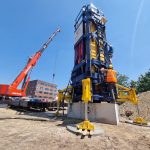
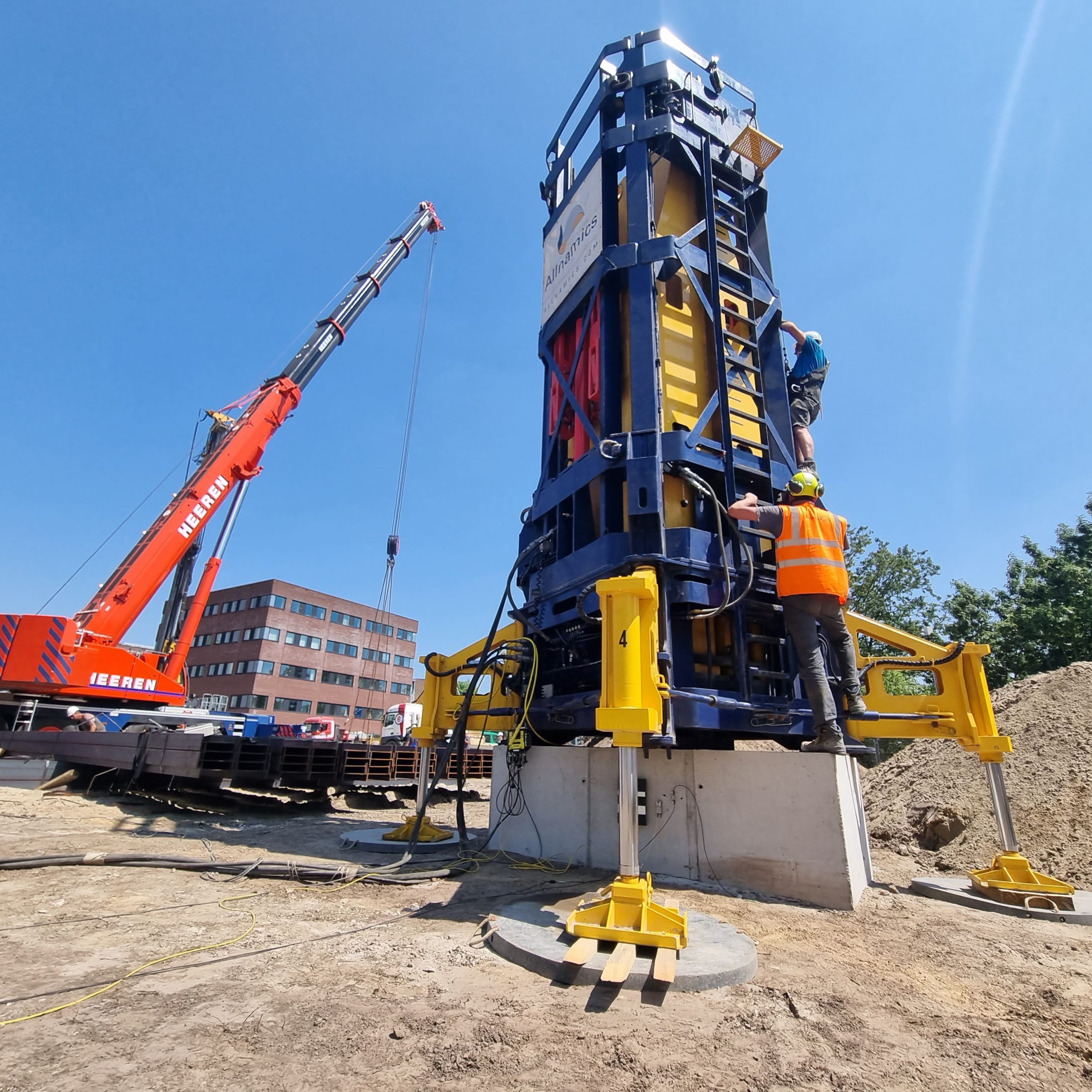
- Rapid Load Testing (RLT): Using our StatRapid system, we apply controlled impulse loads that eliminate stress wave effects and deliver high-accuracy capacity results, particularly useful for cohesive soils and larger-diameter piles.
- Static Load Testing (SLT): We design and execute static load tests where load-settlement behavior governs design or where regulatory requirements demand the reference method.
- Pile Damage Assessment: When installation problems occur, such as early refusal, broken pile tops, or horizontal cracks, we analyze wave patterns from driving measurements to identify the cause and propose remedial actions.
If your project involves driven, bored, or vibratory-installed piles and you need to verify that the installation method has produced the required foundation performance, contact us to discuss testing the right testing approach for your site conditions and program requirements.
Related Articles
- Why is the driving frequency so important in a Vibratory Driving Prediction?
- Are there international codes for Rapid Load Testing?
- Is the Rapid Load testing better than Static Load testing?
- What is the future of real-time pile monitoring on sites?
- How do you choose the right pile load testing method in 2026?