


How is digital monitoring changing pile load testing in 2026?
Digital monitoring is changing pile load testing by enabling continuous, real-time data capture throughout installation and testing, replacing manual readings with automated sensor systems that deliver faster, more accurate results. This shift gives engineers immediate access to force, displacement, stress, and integrity data at every stage of a pile’s life, from the first hammer blow to final capacity verification. The sections below answer the most common questions about what this means in practice for your projects in 2026.
What data can digital monitoring systems capture during pile load testing?
Digital monitoring systems capture force, velocity, strain, acceleration, displacement, and pile head settlement during a pile load test. Depending on the sensors deployed, they also record driving stress distribution, soil resistance along the pile shaft, hammer energy transfer, and structural integrity signals, all simultaneously and continuously throughout the test event.
In practice, the data captured depends on the testing method and the sensor configuration. During Dynamic Load Testing (DLT), sensors attached to the pile measure strain and acceleration at the pile head with every hammer impact. These measurements feed directly into wave equation analysis, producing force and velocity traces that engineers use for signal matching. During Rapid Load Testing, load cells and displacement gauges record load and settlement as a function of time under a controlled impulse, capturing the full load-settlement curve without the stress wave complications that affect dynamic methods.
For installation monitoring, digital systems track a broader set of parameters simultaneously:
- Compressive and tensile stresses in the pile during driving
- Pile penetration rate and cumulative set per blow
- Hammer energy and efficiency at each impact
- Vibratory hammer frequency and amplitude when vibro-driving is used
- Pile inclination and positional data
- Pore water pressure where instrumented soil sensors are included
Offshore applications add further complexity. Sensors must function reliably at depth, and wireless data transmission systems allow monitoring data to reach the surface in real time even when sensors are positioned below the waterline. Waterproof sensor systems certified for operation at significant depths make it possible to monitor piles installed by underwater hammers without interrupting the installation sequence.
How does real-time data change how engineers interpret test results?
Real-time data allows engineers to interpret pile load test results as the test progresses rather than after it concludes. This means decisions about hammer energy, driving sequence, or test continuation can be made on-site based on live readings, reducing the risk of pile damage, missed capacity signals, or wasted test cycles.
In traditional practice, data was recorded in the field and analyzed later, sometimes days after the test. If a pile experienced excessive tensile stress during driving, that damage was often discovered only during post-processing. With real-time digital monitoring, the same stress exceedance triggers an immediate alert, giving the installation team the information they need to adjust hammer energy or driving sequence before structural damage occurs.
Real-time access also improves decision-making across a full foundation program. If early test results show that piles consistently achieve higher capacity than the design model predicted, your team can evaluate whether pile lengths or installation criteria for the remaining piles can be adjusted. This kind of program-level optimization is only practical when data is available quickly enough to act on it before the next piles are installed.
Signal matching analysis, which derives a calibrated soil model from measured force and velocity traces, benefits from real-time data because engineers can assess data quality during the test and request additional hammer blows or a redrive if the initial measurements are insufficient. This reduces the likelihood of inconclusive results that require a return visit to site.
What is the difference between traditional and digital pile load testing?
The core difference between traditional and digital pile load testing is how data is collected, transmitted, and processed. Traditional methods rely on manual readings, paper records, and post-test analysis. Digital methods use automated sensor arrays, continuous electronic logging, and software-driven analysis that begins during the test itself, compressing the time between data collection and actionable results.
Data collection and transmission
In traditional static load testing, engineers record load cell readings and dial gauge displacements at set time intervals by hand. The process is labor-intensive and introduces human error at each reading point. Digital systems replace this with automated logging at high sampling rates, capturing hundreds of data points per second during dynamic events and continuous displacement curves during static or rapid load tests. Wireless transmission systems, including external Wi-Fi antennas on offshore monitoring units, allow data to reach engineers onshore or in a control room without physical cable runs across the deck.
Analysis speed and depth
Traditional analysis required engineers to return to the office before signal matching or load-settlement curve interpretation could begin. Digital workflows allow preliminary analysis to run in parallel with the test. Software such as AllWave-DLT processes wave equation models against live or recently captured field data, so an experienced engineer can assess whether the test has mobilized sufficient soil resistance before the hammer is demobilized. This reduces the risk of incomplete tests and the cost of remobilization.
Can digital monitoring replace static load testing?
Digital monitoring and dynamic testing methods cannot fully replace static load testing in all situations. Static Load Testing (SLT) measures pile displacement under sustained, slowly applied loads and produces a direct, unambiguous load-settlement curve. Dynamic and digital monitoring methods are powerful tools, but they measure different physical phenomena and carry limitations that make SLT the preferred or required method for certain pile types and soil conditions.
The distinction comes down to what each method actually measures. In static load testing, forces and displacements are measured directly and independently using load cells and displacement gauges. In dynamic testing, load is derived from measured strain multiplied by pile stiffness, and displacement is derived from measured acceleration through double numerical integration. These post-processing steps introduce inaccuracy that is acceptable for end-bearing steel piles but becomes significant for cast-in-situ concrete piles where cross-sectional area and concrete stiffness are variable.
Time-dependent behavior is another area where static testing provides data that digital dynamic monitoring cannot replicate. In fine-grained cohesive soils, pile settlement develops over time as pore water pressures dissipate. A dynamic test applies a load lasting milliseconds and cannot capture this behavior. Static load testing, applied over hours or days, records creep, long-term settlement, and the full load-displacement response under sustained loading.
Rapid Load Testing (RLT) occupies a useful middle ground. Because the impulse duration is significantly longer than a dynamic blow, stress wave effects are eliminated and the accuracy of capacity determination improves considerably compared to DLT alone. RLT is a direct method that measures load and settlement independently, making it a practical alternative to SLT in many situations, particularly offshore where the logistical demands of a full static test reaction system add significant cost and complexity.
For projects with strict regulatory requirements or mandatory independent verification, static testing offers a more straightforward evidentiary record because results require no interpretation model to read. Digital monitoring enhances the value of all testing methods, but it does not remove the underlying need for the right test type matched to the pile and soil conditions.
What are the biggest challenges of implementing digital monitoring on pile projects?
The biggest challenges of implementing digital monitoring on pile load test projects are sensor installation logistics, data quality management, the expertise required to interpret results correctly, and the practical demands of offshore or remote environments where equipment must perform reliably under harsh conditions.
Sensor placement is a recurring practical challenge. For dynamic load testing, sensors require a minimum mounting distance below the pile head to produce reliable measurements. On bored piles, this can require excavation or pile head extension before sensors can be attached. Offshore, sensors positioned below the waterline must be waterproof and rated for the relevant water depth, and their installation must be coordinated with the driving sequence without causing delays to the installation vessel.
Data quality depends heavily on equipment condition and field execution. Signal matching analysis is only as reliable as the input data it processes. Poorly maintained sensors, incorrect calibration, or inadequate sensor coupling to the pile surface all degrade data quality in ways that may not be immediately obvious in the field but significantly affect the accuracy of the analysis. This is why fieldwork must be performed with well-maintained, suitable equipment operated by trained personnel.
Interpretation remains a human-dependent process. Signal matching models contain a large number of parameters, and there is no unique solution for any given pile. Different parameter sets can produce equally plausible signal matches, which means results vary depending on the experience and judgment of the engineer performing the analysis. The range of outcomes among engineers, even highly experienced ones, is a real limitation that project teams should account for when setting acceptance criteria.
On large offshore programs, data management adds another layer of complexity. Testing hundreds of piles generates substantial volumes of sensor data that must be stored, organized, and linked to individual pile records. Without a structured data management approach, the value of real-time monitoring is undermined by the difficulty of retrieving and comparing results across the program.
How will digital monitoring shape pile testing standards and compliance by 2026?
By 2026, digital monitoring is pushing pile testing standards toward greater data transparency, traceability, and real-time verification requirements. Regulators and project owners increasingly expect continuous electronic records of installation and testing rather than periodic manual readings, and this expectation is beginning to influence how testing programs are specified and audited.
The shift toward digital records creates a more complete audit trail for foundation performance. Every hammer blow, every stress reading, and every load increment can be time-stamped and linked to a specific pile location. This level of traceability supports post-construction reviews, insurance assessments, and long-term asset management in ways that paper-based records cannot match.
For offshore wind and large infrastructure programs, digital monitoring data is increasingly used to optimize installation programs in real time rather than simply verify compliance after the fact. When early piles in a program consistently exceed predicted capacity, project teams use that data to adjust design assumptions for the remaining piles, reducing material use, shortening installation schedules, and lowering carbon emissions. Standards are beginning to recognize this optimization potential as a legitimate use of testing data rather than treating testing purely as a pass-or-fail verification step.
The growing use of automated data acquisition also raises the bar for what constitutes acceptable field practice. Projects that previously relied on periodic manual readings now face expectations for continuous logging, defined sampling rates, and documented calibration records. As these expectations become embedded in project specifications and eventually in formal standards, teams that have already adopted digital monitoring workflows will be better positioned to meet compliance requirements without additional cost or delay.
How We Support Digital Pile Load Testing
We bring together decades of experience in pile testing, sensor technology, and geotechnical analysis to help you implement digital monitoring effectively across your foundation program, whether you are working onshore or in a demanding offshore environment.
Our approach covers the full scope of what digital pile load testing requires:
- Dynamic Load Testing (DLT): We deploy our in-house developed PDR monitoring system with strain and acceleration sensors to capture high-quality field data during driving and redrives, then perform signal matching analysis using AllWave-DLT software to derive bearing capacity, soil resistance distribution, and pile integrity.
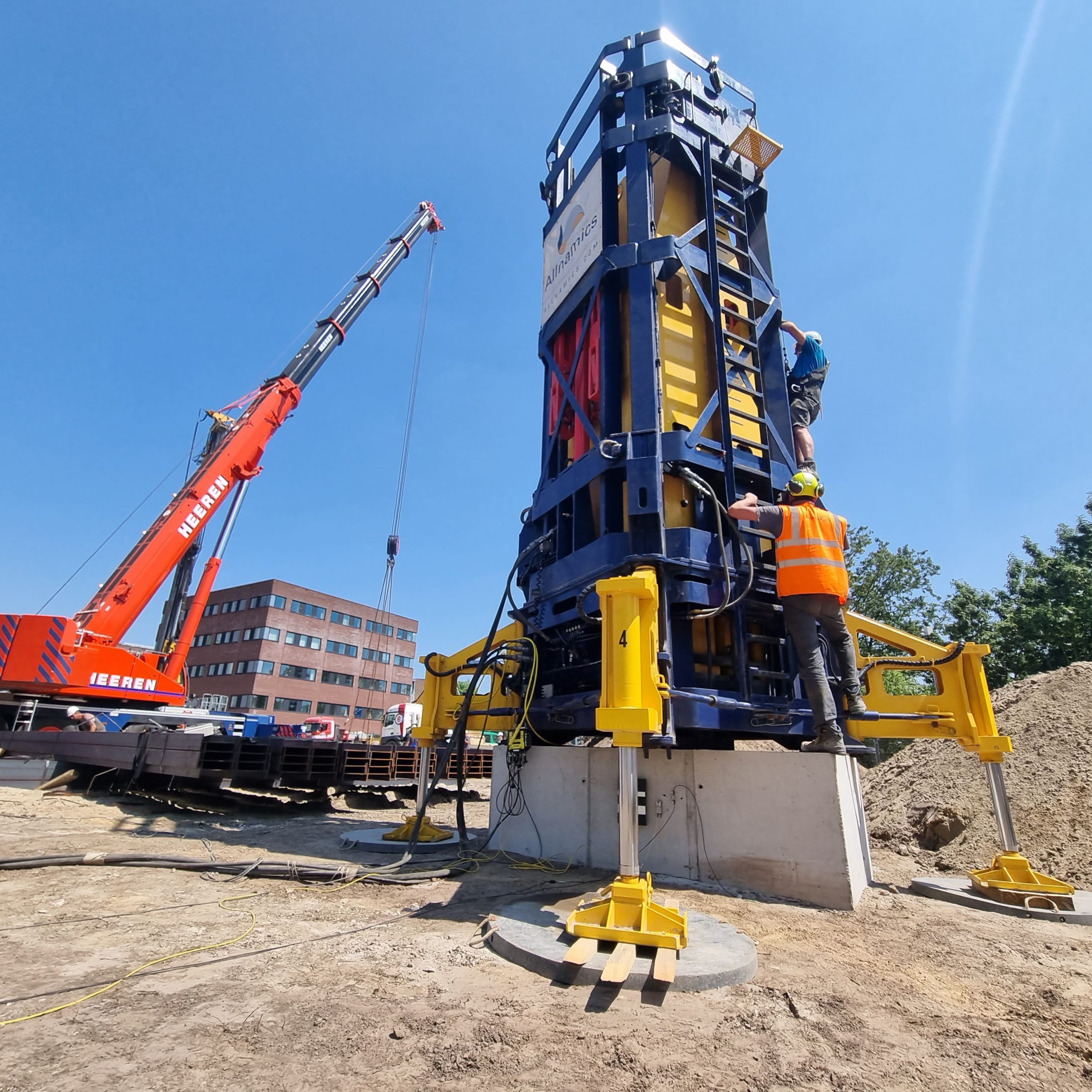
- Rapid Load Testing (RLT): Using our StatRapid system, we apply a controlled impulse load and measure load and settlement directly, eliminating stress wave effects and improving capacity determination accuracy compared to dynamic testing alone.
- Static Load Testing (SLT): Where direct, sustained load measurement is required, we design and execute static load tests with full digital data logging, producing unambiguous load-settlement records for regulatory compliance and design verification.
- Installation monitoring: We monitor pile stresses, penetration, hammer energy, and vibratory hammer performance in real time during installation, giving your team the information needed to adjust driving parameters before damage occurs.
- Offshore and underwater monitoring: Our sensors are certified waterproof to depths of 500 m, and our offshore monitoring systems support wireless data transmission so your engineers can access results from the control room or onshore.
- Pile integrity testing: We detect structural defects and damage that visual inspection cannot reveal, using methods suited to the pile type and project conditions.
If you want to discuss how digital monitoring can improve the reliability and efficiency of your next pile load test program, contact our team to talk through your project requirements.