


StatRapid testing is a form of Rapid Load Testing (RLT) that generates a controlled force pulse on a pile head using a falling mass and a specially designed spring or buffer package. The system produces a load pulse long enough to minimize stress wave interference in the pile, allowing engineers to derive reliable bearing capacity data without the complexity of a full static load test. The sections below answer the most common questions about how StatRapid works, what it measures, and where it fits in foundation engineering practice.
How does StatRapid testing work?
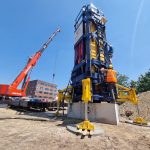
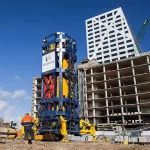
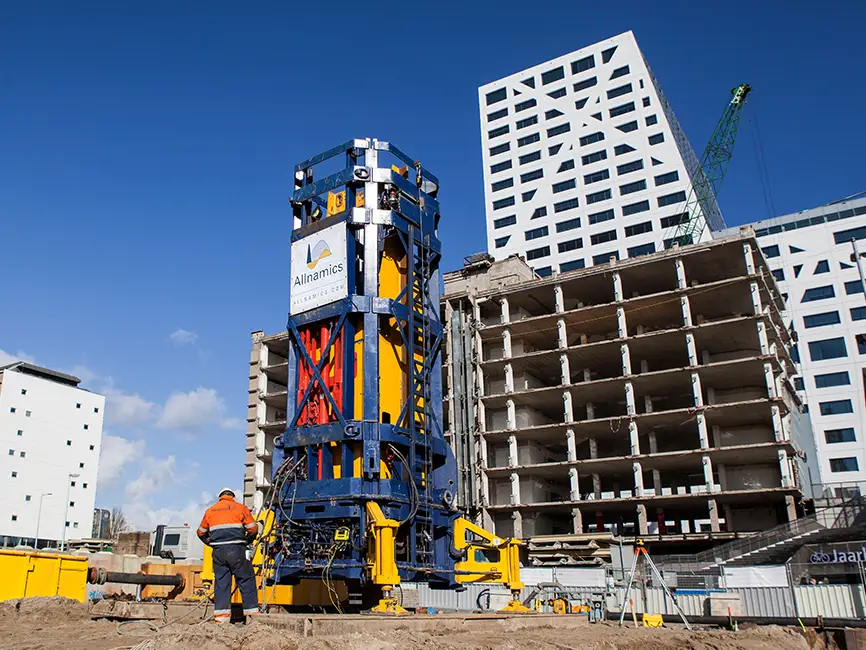
StatRapid testing works by dropping a modular falling mass onto a carefully engineered buffer or spring package positioned on the pile head. The buffer extends the duration of the impact, transforming what would otherwise be a sharp dynamic blow into a gradual force pulse that lasts long enough to satisfy the physical conditions of a Rapid Load Test. The result is a controlled, measurable load event that engineers can analyze to determine pile resistance.
The system is hydraulically adjustable. By varying the drop height and the mass of the falling weight, the load level can be tuned to match the expected pile resistance. The composition of the buffer package controls the shape and duration of the force pulse. This combination gives the test team precise control over both the magnitude and the character of the applied load.
StatRapid was introduced in 2012 as a modern RLT system developed in collaboration between Cape Holland and our team at Allnamics. The equipment is modular and transportable by road, with setup typically completed in two to three hours depending on the configuration. Systems have been used to investigate pile resistances in the range of 8 to 16 MN, making the method applicable to a wide range of pile sizes and project types.
What does StatRapid testing measure?
StatRapid testing measures the force applied to the pile head, the displacement of the pile head, and the acceleration of the pile during the load event. These three measurements form the core dataset from which engineers derive the pile’s bearing capacity and load-displacement behavior.
The instrumentation used includes calibrated load cells, an optical displacement measurement system, and accelerometers. Each instrument captures a different aspect of the pile’s response to the applied load pulse:
- Load cells record the force directly at the pile head, independent of the pile’s material properties
- Optical displacement sensors track how far the pile moves during and after the load event
- Accelerometers capture the pile’s inertial response, which is used to separate the pile’s mass contribution from the soil resistance
When additional instrumentation is installed at different depths along the pile shaft, engineers can also determine how the load distributes through the pile. This makes it possible to separate shaft friction from end bearing, providing detailed insight into the actual load transfer mechanism. That level of detail supports not only capacity verification but also the optimization of geotechnical design parameters.
How does StatRapid compare to static load testing?
StatRapid and Static Load Testing (SLT) both aim to characterize a pile’s bearing capacity and load-displacement behavior, but they differ significantly in how the load is applied, the time required, and the complexity of the setup. StatRapid applies a rapid force pulse measured in milliseconds, while a static test applies load incrementally over hours or days.
A static load test directly measures the pile’s response under slow, sustained loading, which most closely resembles real service conditions. However, it requires a substantial reaction system, whether kentledge, anchor piles, or a reaction frame, which adds cost, time, and logistical complexity, particularly on constrained sites or for large-diameter piles.
StatRapid reduces that logistical burden considerably. Because the load is generated by a falling mass rather than a reaction structure, the equipment footprint is smaller and mobilization is faster. The trade-off is that the measured response must be converted from a rapid load event to a static-equivalent result using an interpretation method such as the Unloading Point Method. This conversion is well established and covered by international standards, but it does require careful assessment of soil type and pile-soil interaction to ensure the result is reliable.
For projects where a full static test is impractical but a simple dynamic test is considered too aggressive for the pile type, StatRapid offers a practical middle path that delivers comparable information with manageable risk.
What types of piles and projects is StatRapid suitable for?
StatRapid is suitable for a broad range of pile types and project contexts, but it is particularly well matched to large-diameter cast-in-situ concrete piles where conventional dynamic load testing carries a risk of inducing damaging stress levels in the pile head.
The buffer package in the StatRapid system does more than extend the load pulse duration. It also reduces peak stresses at the pile head during the load event. This makes the method relevant for bored piles, CFA piles, and other in-situ concrete piles that may have lower concrete strengths than prefabricated driven piles. A real-world example from a project in Barcelona illustrates this: large bored piles with diameters of approximately 1.5 meters and working loads between 6 and 8 MN were tested using StatRapid after a bi-directional static test failed to fully mobilize the available resistance. Dynamic load testing was considered unsuitable for those piles due to the risk of excessive head stresses.
Beyond pile type, StatRapid is applicable across a wide range of project sectors:
- Building and infrastructure foundations where static testing is logistically difficult
- Port and marine structures with large-diameter piles
- Offshore and nearshore energy projects requiring efficient load verification
- Urban redevelopment sites with restricted access or limited headroom
- Projects requiring separation of shaft friction and end bearing for design optimization
How does StatRapid differ from dynamic load testing?
The fundamental difference between StatRapid and Dynamic Load Testing (DLT) is the duration of the applied load pulse. In a dynamic load test, a drop hammer strikes the pile and generates a very short, high-energy impact. In StatRapid, the buffer package is specifically designed to extend that impact, producing a force pulse that lasts long enough to meet the physical conditions of a Rapid Load Test.
This distinction matters because stress wave behavior in the pile changes dramatically with pulse duration. A short dynamic impact generates strong stress wave reflections that travel up and down the pile and complicate interpretation. A longer pulse, as produced by StatRapid, reduces the dominance of those stress wave effects, allowing a simpler and more direct analysis of the soil resistance.
The practical consequences of this difference include:
- Lower peak stresses at the pile head, reducing the risk of pile damage during testing
- Simpler interpretation, because the inertia correction for the pile mass is more straightforward than full wave equation analysis
- Better suitability for cast-in-situ concrete piles, which are more vulnerable to high-intensity impacts
- Different instrumentation requirements, with StatRapid relying on optical displacement sensors rather than strain gauges alone
It is important to note that StatRapid is not simply a slower dynamic test. It belongs to a separate test category with its own physical conditions, interpretation methods, and applicable standards.
Which standards and codes recognize StatRapid testing?
StatRapid testing is recognized as a valid form of Rapid Load Testing under several national and international standards. The most directly relevant include ISO 22477-10, ASTM D7383, and the Dutch standard NEN 7201:2025.
NEN 7201:2025 explicitly distinguishes between different RLT execution principles, naming both the falling mass with spring package approach (which covers StatRapid) and the Statnamic method where a mass is propelled upward by rapid gas pressure. This distinction reflects the maturity of the field and the recognition that different execution systems, while sharing the same underlying physical principle, have specific characteristics that practitioners need to understand.
ISO 22477-10 provides the international framework for Rapid Load Testing of piles and covers requirements for instrumentation, test execution, and result interpretation. ASTM D7383 serves a similar function in North American practice. The Japanese Geotechnical Society published JGS 1815-2002, which was among the earliest formal standards for RLT globally and helped establish the interpretation methods that later influenced international standardization.
For any project, the applicable standard depends on the jurisdiction and the contractual requirements. Your team should confirm which standard governs the test program during the design phase, as this affects instrumentation requirements, acceptance criteria, and the interpretation method used to convert rapid load test results into static-equivalent capacity values.
How Allnamics Supports StatRapid Testing
We developed the StatRapid system together with Cape Holland and have been applying it on projects across Europe and beyond since its introduction. Our team brings together the technical depth needed to plan, execute, and interpret a StatRapid test correctly, from predicting the required drop mass and spring configuration in advance to analyzing the measured data and delivering a reliable bearing capacity assessment.
When you work with us on a StatRapid program, we provide:
- Pre-test prediction of the required mass, drop height, and buffer configuration based on your pile design and expected resistance
- Full test execution with calibrated load cells, optical displacement sensors, and accelerometers
- Optional distributed instrumentation along the pile shaft to separate shaft friction from end bearing
- Data interpretation using established methods including the Unloading Point Method, with assessment of soil-specific rate effects
- Reporting aligned with applicable standards, including ISO 22477-10, NEN 7201:2025, or ASTM D7383 depending on your project requirements
- Independent technical review for projects where a third-party assessment of RLT results is required
If you are planning a foundation testing program and want to understand whether StatRapid is the right approach for your pile type and project conditions, contact our team to discuss your requirements.
Gerelateerde artikelen
- When should you use AllWave-PDP and when AllWave-VDP?
- Why is AllWave-VDP the most used prediction program for offshore installation predictions?
- Is the Rapid Load testing better than Static Load testing?
- What role does pile testing play in foundation reuse decisions?
- What is the difference between elastic and plastic settlement?