


ISO 22477 defines pile testing procedures through a multi-part standard that establishes unified requirements for how pile load tests are planned, executed, and reported across different testing methods. It covers static, dynamic, and rapid load testing within a single framework, giving engineers and project teams a consistent technical basis for verifying pile performance. The sections below address the most common questions about how ISO 22477 works in practice.
Which pile testing methods does ISO 22477 cover?
ISO 22477 covers the full range of pile load testing methods used in geotechnical practice, organized across dedicated parts of the standard. These include Static Load Testing, Dynamic Load Testing, Rapid Load Testing, and Pile Integrity Testing, each addressed in a separate part with method-specific requirements while sharing a common framework for planning, execution, and reporting.
The standard is structured as a multi-part series under the broader Eurocode 7 framework for geotechnical design. Each part targets a distinct testing method:
- ISO 22477-1 covers static axial pile load tests in compression and tension
- ISO 22477-4 addresses dynamic load testing using stress wave methods
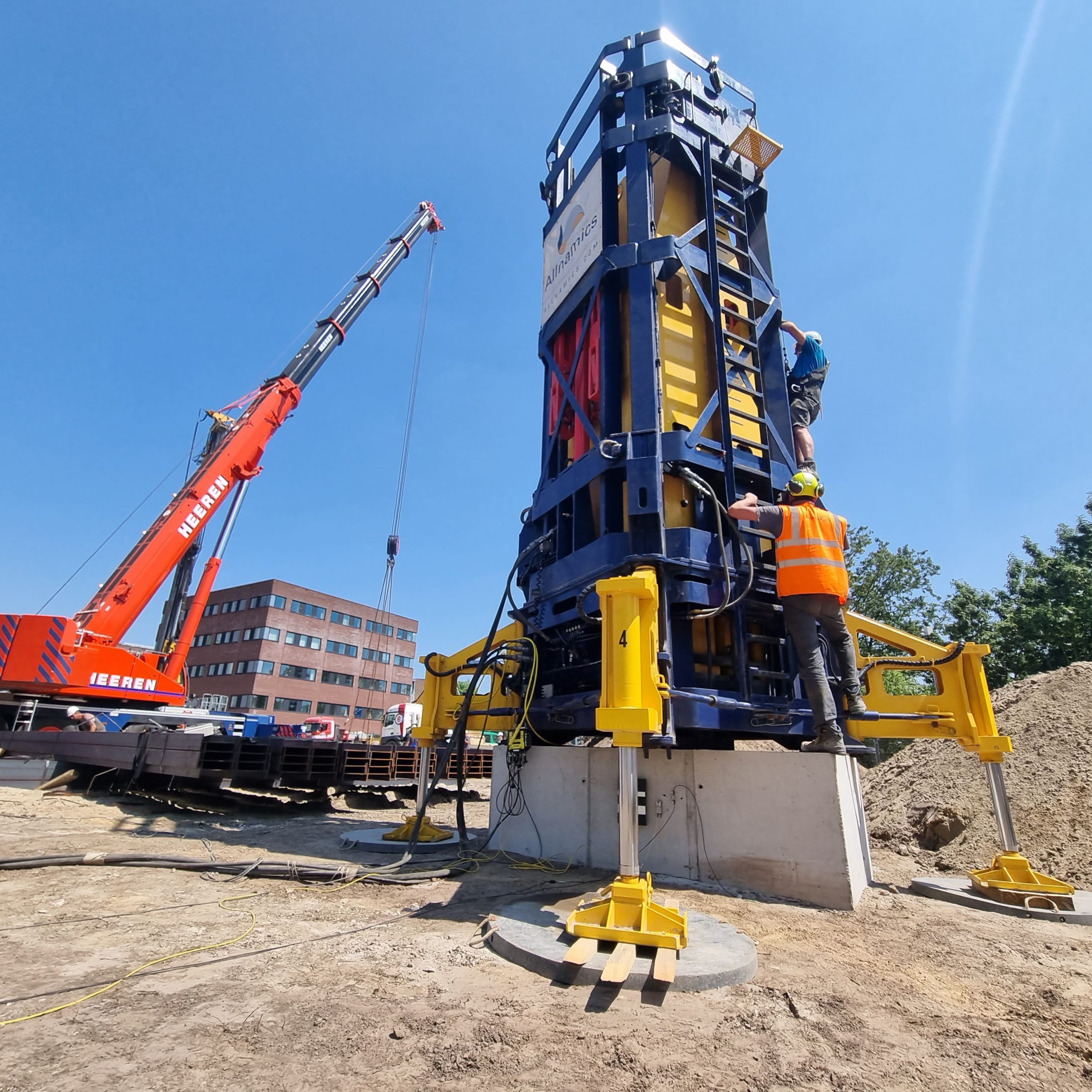
- ISO 22477-5 covers rapid load testing, including methods such as Statnamic and StatRapid
- ISO 22477-10 addresses pile integrity testing using low-strain methods
This structure means that a project team working with multiple testing methods can apply a single overarching standard rather than navigating separate national codes for each method. The coverage is broad enough to support both onshore and offshore pile testing programs, and it applies to driven piles, bored piles, and cast-in-situ concrete piles, though the suitability of each method varies significantly depending on pile type and soil conditions.
How does ISO 22477 classify pile load test categories?
ISO 22477 classifies pile load tests into investigation tests, verification tests, and integrity tests, each serving a different purpose in the design and quality assurance process. Investigation tests establish the load-displacement behavior and ultimate capacity of a pile, while verification tests confirm that production piles meet specified acceptance criteria. Integrity tests assess the structural condition of the pile shaft.
This classification matters because it directly influences how a test is designed, what load levels are required, and how results are interpreted:
- Investigation tests are typically performed on trial piles before or at the start of construction. They aim to load the pile to failure or to a defined multiple of the design load, providing data that validates or refines the design. These tests carry the highest level of technical rigor.
- Verification tests are performed on working piles during or after installation to confirm that each tested pile meets the required bearing capacity. They are more common in quality control programs across large pile groups.
- Integrity tests do not measure bearing capacity directly. Instead, they detect anomalies in the pile shaft such as cracks, necking, or inclusions that could affect structural performance under load.
Understanding which category applies to your project determines the test program scope, the number of piles to be tested, and the acceptance criteria your team must satisfy. Many projects combine categories, using investigation tests on a small number of trial piles and verification tests across the broader production program.
What are the key procedural requirements under ISO 22477?
The key procedural requirements under ISO 22477 cover test planning, equipment calibration, load application procedures, measurement systems, and the waiting period between pile installation and testing. Each part of the standard specifies these requirements for its respective method, but common themes run across all parts: traceability of measurements, defined load increments, and documented acceptance criteria.
Test planning and equipment requirements
Before testing begins, ISO 22477 requires a written test plan that defines the test type, load levels, load increments, measurement intervals, and acceptance criteria. Equipment used to apply and measure loads must be calibrated and traceable to recognized standards. For static load testing, load cells and displacement gauges must meet defined accuracy thresholds. For dynamic load testing, strain transducers and accelerometers must be mounted at a specified minimum distance below the pile head, and in some cases this requires excavation or pile head preparation.
Load application and measurement procedures
ISO 22477 specifies how loads are applied and how measurements are recorded during the test. For static tests, load is applied in defined increments with hold periods at each stage, and displacement is recorded until creep falls within specified limits before the next increment is applied. For dynamic tests, the standard requires that sufficient energy is delivered to mobilize the full soil resistance, and that signal matching analysis is performed by a qualified engineer using appropriate software. For rapid load testing, the standard defines the acceptable load duration and requires that the unloading point method or an equivalent analytical approach is used to derive static capacity from the measured force-displacement response.
Waiting periods between installation and testing are also regulated. For driven piles in cohesive soils, pore pressures generated during driving must be allowed to dissipate before testing, so that the measured capacity reflects the pile’s static behavior rather than a temporarily reduced post-installation state.
How does ISO 22477 differ from earlier national pile testing standards?
ISO 22477 differs from earlier national standards primarily by providing a unified, internationally applicable framework that replaces a fragmented set of country-specific codes. Before ISO 22477, pile testing requirements varied significantly between countries, making it difficult to compare results across borders or apply consistent quality criteria on international projects. ISO 22477 harmonizes these requirements and aligns with Eurocode 7 for geotechnical design.
Several specific differences stand out when comparing ISO 22477 to older national approaches:
- Scope of methods covered: Many earlier national standards addressed only one or two testing methods. ISO 22477 covers static, dynamic, rapid, and integrity testing within a single coherent framework, reducing the need to cross-reference multiple documents.
- Reporting requirements: ISO 22477 sets more detailed and standardized reporting requirements than most national predecessors, improving the comparability and auditability of test results.
- Alignment with design standards: The standard is explicitly linked to Eurocode 7, meaning that test categories and acceptance criteria connect directly to the design verification approach used in European geotechnical practice.
- International applicability: Projects in multiple countries, including offshore wind developments spanning different jurisdictions, can now reference a single standard rather than adapting to each national code.
For engineering teams working on cross-border infrastructure or offshore energy projects, this harmonization reduces ambiguity in contract specifications and simplifies the process of demonstrating regulatory compliance.
What does ISO 22477 require in a pile test report?
ISO 22477 requires a pile test report to document all information needed to reproduce, verify, and interpret the test results independently. This includes project identification, pile geometry and installation records, equipment calibration certificates, the test procedure followed, all raw measurement data, and the analysis method used to derive capacity or integrity conclusions.
More specifically, a compliant report under ISO 22477 must include:
- A description of the pile type, dimensions, material, and installation method
- Soil investigation data relevant to the test location
- Details of the loading system and reaction arrangement
- Calibration records for all measurement equipment
- A record of all applied loads and measured displacements at each stage
- The name and qualifications of the engineer responsible for analysis
- The analysis method and software used, particularly for dynamic and rapid load tests
- The derived test result, including bearing capacity or integrity assessment
- A statement of whether the pile meets the specified acceptance criteria
For dynamic load testing, the report must also include the signal matching results and the soil model derived from the analysis. This level of documentation supports independent review and is particularly important when test results are used to justify design changes or to satisfy regulatory requirements on high-consequence projects.
When should ISO 22477 be applied on a foundation project?
ISO 22477 should be applied whenever pile load testing forms part of the design verification or quality assurance program on a project governed by Eurocode 7, or when an internationally recognized testing standard is required by contract, regulation, or client specification. It is relevant from the earliest trial pile testing phase through to production pile verification and post-installation integrity assessment.
In practical terms, ISO 22477 applies in the following situations:
- Projects in European jurisdictions where Eurocode 7 is the governing design standard
- Offshore wind, oil and gas, and marine infrastructure projects where international standards are specified in the contract
- Large infrastructure programs where multiple testing methods are used and a consistent framework is needed across the program
- Projects requiring independent verification of pile capacity, where a recognized standard provides the evidentiary basis for acceptance
- Any project where test results will be used to adjust design parameters, reduce pile lengths, or justify changes to installation criteria
Even on projects where ISO 22477 is not contractually mandated, applying its requirements voluntarily strengthens the technical defensibility of your test program. The standard’s documentation and reporting requirements ensure that results are traceable and interpretable by any qualified engineer, which matters when results are scrutinized during design reviews, regulatory audits, or dispute resolution.
How Allnamics Supports ISO 22477-Compliant Pile Testing
We carry out pile load testing programs that meet the procedural and reporting requirements of ISO 22477 across all major testing methods. Whether your project requires static, dynamic, or rapid load testing, our teams plan and execute tests in line with the standard’s requirements for equipment calibration, load application, measurement accuracy, and documentation.
Here is what we bring to an ISO 22477-compliant testing program:
- Full method coverage: We perform Static Load Testing, Dynamic Load Testing, and Rapid Load Testing, giving your team access to the right method for your pile type and project conditions
- Signal matching by qualified engineers: Our dynamic load test analyses are performed by experienced engineers using our in-house AllWave-DLT software, meeting the standard’s requirements for analyst qualifications and documented methodology
- Calibrated, traceable equipment: All measurement systems we deploy are calibrated to recognized standards, and calibration records are included in every test report
- ISO 22477-compliant reporting: We produce reports that document all required information, from raw measurement data to derived capacity results, supporting independent review and regulatory acceptance
- Onshore and offshore capability: We operate globally, including on offshore wind and marine infrastructure projects where ISO 22477 compliance is specified in the contract
- Independent technical advice: If you are unsure which test category applies to your project or how to structure your test program under ISO 22477, we can advise on test planning before mobilization begins
If your project requires a pile testing program that meets ISO 22477 requirements, contact us to discuss your scope, and we will help you design a program that delivers the data your project needs.