

Soil plugging occurs when soil inside an open-ended pile becomes trapped and moves with the pile as a rigid mass during driving or loading. This happens because friction between the inner pile wall and the soil column builds up to the point where the soil cannot slide freely upward. The result is a significant change in how the pile behaves, both during installation and under load. The sections below unpack the mechanics, the engineering implications, and how plugging is handled in drivability studies and pile load testing.
How does a soil plug form inside an open-ended pile?
A soil plug forms when the internal shaft friction along the inner wall of an open-ended pile becomes large enough to prevent the soil column from moving upward relative to the pile. As the pile is driven into the ground, soil enters the open toe. If the cumulative friction on that internal soil column exceeds its weight plus any inertial resistance, the soil locks in place and begins to act as a plug.
The process is gradual. In the early stages of driving, soil typically flows into the pile relatively freely, and the pile behaves in an unplugged or coring mode. The internal soil column grows in length as the pile advances. Over time, as the pile penetrates deeper and the internal column becomes longer, the total inner friction increases. At some point, the friction is sufficient to mobilize the full plug, and the pile transitions toward plugged behavior.
Several soil properties accelerate plug formation. Dense sands with high friction angles generate more inner wall friction per unit length. Soil that dilates under shear increases radial stress against the pile wall, further raising friction. Pile geometry also plays a role: a smaller inner diameter means a shorter column length is needed before plugging occurs, because the ratio of inner surface area to plug weight is more favorable for friction to dominate.
What is the difference between plugged and unplugged pile behavior?
In plugged behavior, the internal soil column moves with the pile as a rigid body, so the pile effectively acts like a closed-ended pile. The toe resistance acts over the full gross cross-sectional area of the pile, including the soil plug. In unplugged behavior, the soil inside the pile slides upward relative to the pile wall, and toe resistance acts only on the annular steel area at the pile tip.
This distinction has major consequences for both drivability and load-bearing capacity:
- Plugged piles mobilize a much larger toe area, which increases end-bearing capacity significantly under static loading conditions.
- Unplugged piles require less driving energy per blow to advance, because the effective toe resistance is lower and the pile can core through the soil.
- During dynamic events such as impact driving, a pile may behave as unplugged even if it would plug under slow static loading, because the inertia of the soil plug prevents it from fully mobilizing within the short duration of a hammer blow.
This dynamic versus static distinction is important for engineers. A pile that cores during installation may still develop full plugged capacity under the sustained loads of a structure. Treating these two conditions as identical leads to errors in both installation planning and capacity prediction.
Why does soil plugging make piles harder to drive?
Soil plugging increases driving resistance because it enlarges the effective toe area that must be pushed through the soil. When a plug forms, the pile no longer cores through the ground. Instead, it must displace soil across its full gross cross-section, which requires substantially more energy per blow and raises the blow count needed to achieve further penetration.
Beyond the increased toe resistance, a plugged condition also changes the stress distribution in the pile during driving. Higher toe forces mean larger compressive stresses travel up the pile shaft, which can approach or exceed allowable limits for the pile material. For steel pipe piles, this raises fatigue concerns over a long installation sequence. For concrete piles, it increases the risk of overstress if driving continues without adequate hammer control.
There is also a feedback effect. Once a plug begins to form, the increased resistance generates higher impact stresses, which in turn compact the plug further and increase its friction against the inner wall. This can cause a rapid transition from manageable blow counts to near-refusal conditions, particularly in dense sand layers. Predicting when and where this transition occurs is one of the central challenges in drivability analysis for open-ended piles.
How do engineers predict soil plugging during drivability studies?
Engineers predict soil plugging by modeling the pile-soil interaction across the full installation depth, accounting for both the internal and external resistance profiles. The starting point is a reliable Soil Resistance to Driving (SRD) profile derived from site investigation data, typically CPT results, which captures how resistance varies with depth for both plugged and unplugged conditions.
Drivability software simulates stress wave propagation through the hammer-pile-soil system blow by blow. For each penetration increment, the model evaluates whether the internal friction on the soil column is sufficient to mobilize a plug, or whether the pile will core. This requires the soil model to distinguish between inner and outer shaft friction, and to apply appropriate toe resistance for each mode.
Key inputs that influence the plugging prediction include:
- CPT-based soil classification to identify layers where plugging is likely, such as dense sand intervals
- Friction fatigue parameters that account for the reduction in local shaft friction as the pile tip moves past a given soil level
- Pile geometry, particularly the inner diameter and wall thickness
- Hammer energy and blow rate, which affect the dynamic response of the soil plug
- Dynamic soil resistance components, including damping, which govern how the plug responds to the short duration of an impact
A well-structured drivability study presents results as a function of penetration depth, showing blow count, maximum compressive and tensile stresses, energy transfer, and the predicted plugging mode at each level. This gives the installation team a clear picture of where conditions may change abruptly.
What factors influence whether a pile will plug during installation?
Whether a pile plugs during installation depends on the balance between the forces trying to hold the soil column in place and the forces acting to push it upward. Several factors shift this balance in one direction or the other.
Soil type and density
Dense granular soils generate high inner wall friction and are most prone to causing plugging. Loose sands and soft clays produce less friction per unit length, so the soil column can slide more freely. Layered profiles with alternating dense and soft layers create variable plugging behavior across the installation depth.
Pile geometry and driving method
Piles with a smaller inner diameter plug more readily because the ratio of inner surface area to plug weight is higher. Driving method also matters: impact driving applies a short, sharp impulse that may not fully overcome the plug’s inertia, while vibratory driving applies cyclic loading that can disturb the soil structure and reduce friction temporarily, making unplugged coring more likely. The cyclical disturbance during vibratory driving reduces available shear resistance in granular material, which is one reason vibratory methods often achieve faster penetration in sand.
How is soil plugging accounted for in pile load testing?
In pile load testing, soil plugging is accounted for by distinguishing between the resistance measured during dynamic events and the capacity available under static loading. During Dynamic Load Testing (DLT), the short duration of each impact means the soil plug may not fully mobilize, so the measured toe resistance can reflect unplugged conditions even if the pile would plug under sustained static load.
Signal matching analysis, applied after DLT, allows engineers to separate shaft friction from toe resistance and to assess whether the toe response is consistent with plugged or unplugged behavior. By comparing the measured force and velocity signals at the pile head with a simulated response, the analyst can refine the soil model and estimate the static capacity that corresponds to each resistance component.
For Static Load Testing (SLT), the slow application of load gives the soil plug time to fully mobilize, so plugged capacity is directly measured when it develops. Comparing SLT results with DLT results from the same pile provides useful information about the degree of plugging and the reliability of dynamic methods for that soil profile.
In practice, load test programs for open-ended piles in dense sand often include both methods precisely because the plugging behavior under dynamic and static conditions can differ. Understanding this difference helps engineers set appropriate safety factors and avoid either overestimating or underestimating the pile’s long-term performance.
How Allnamics Helps with Soil Plugging and Drivability Analysis
We combine decades of experience in pile installation mechanics with advanced simulation tools to give your team a reliable picture of plugging behavior before and during installation. Our approach covers the full chain from soil investigation to installation monitoring, so you are not working with assumptions when conditions change on site.
Here is what we offer for projects where soil plugging is a concern:
- Drivability studies using AllWave-PDP, which simulates blow count, stress levels, energy transfer, and plugging mode as a function of penetration depth, based on CPT-derived soil models and friction fatigue parameters. Learn more about the AllWave software package.
- SRD profile development that accounts for both plugged and unplugged toe resistance, giving you realistic upper and lower bounds for installation resistance.
- Dynamic Load Testing and signal matching to verify whether plugged capacity has developed and to calibrate soil models against measured pile response.
- Static Load Testing where direct measurement of plugged capacity is needed for design confirmation.
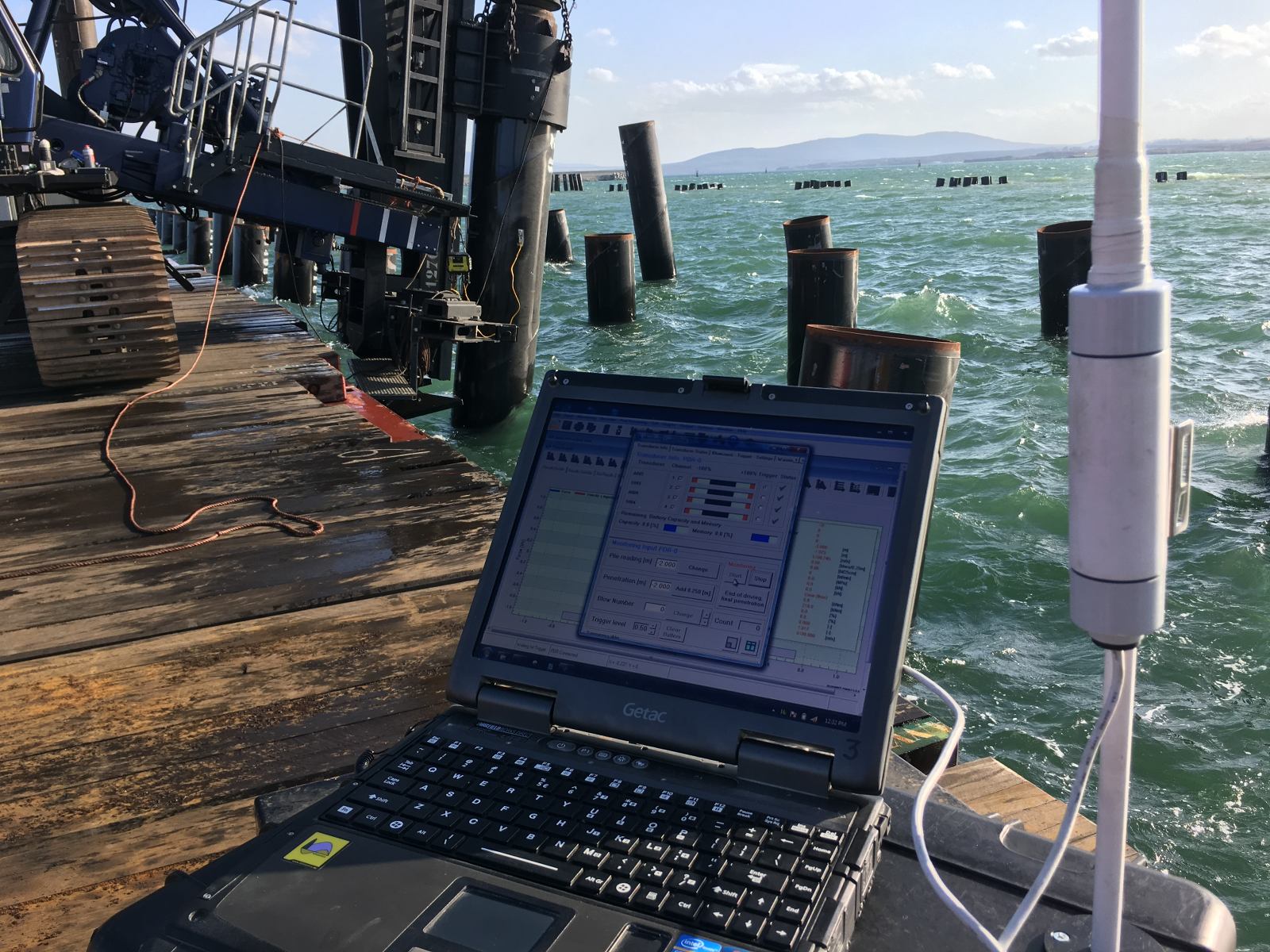
- Installation monitoring that tracks blow count, transferred energy, and stress levels in real time, so your team can respond immediately if plugging causes unexpected refusal risk.
- Independent technical review of existing drivability studies where plugging assumptions need to be verified or challenged.
If your project involves open-ended piles in dense sand, layered profiles, or any condition where plugging behavior is uncertain, contact us to discuss how we can support your installation planning and risk management.