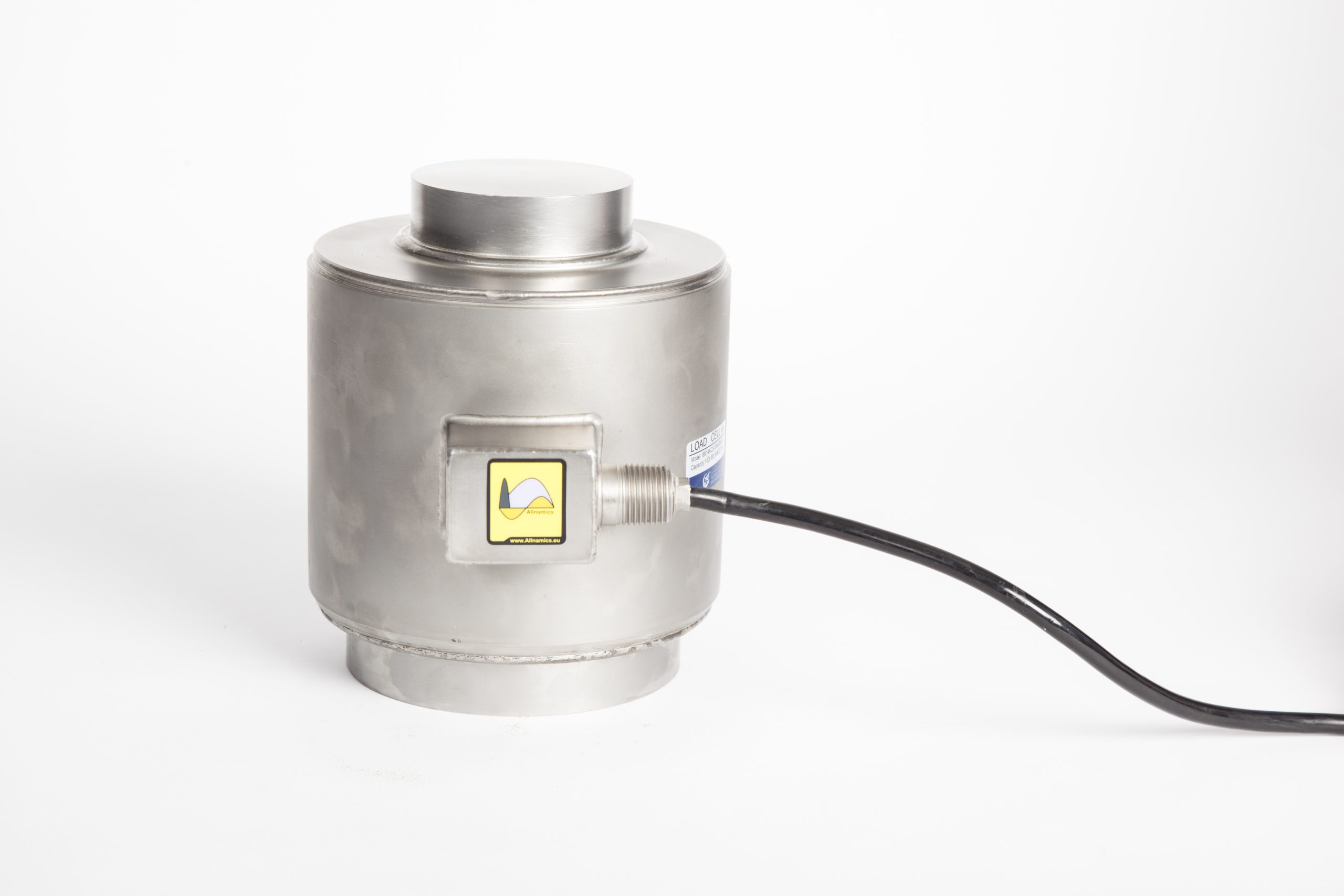



A load cell is a transducer that converts a mechanical force into an electrical signal that can be measured and recorded. In pile load testing, load cells sit between the loading system and the pile head, providing a direct, independent measurement of the applied force at every stage of the test. The sections below answer the most common questions about how load cells work, where they fit in foundation testing, and when to use them.
How does a load cell actually measure force?
A load cell measures force by detecting the tiny deformation that occurs in a precisely engineered metal element when a load is applied. Strain gauges bonded to that element change their electrical resistance in proportion to the deformation. A Wheatstone bridge circuit converts this resistance change into a voltage output, which scales linearly with the applied force.
The metal element at the core of a load cell is designed to deform in a controlled, predictable way. When force is applied, the material compresses or stretches by a microscopic amount. The strain gauges, which are essentially fine resistive wires or foil patterns, follow that deformation and produce a measurable change in resistance. Because the relationship between deformation and resistance change is consistent and repeatable, the output voltage gives an accurate picture of the applied force at any given moment.
The signal from the bridge circuit is typically in the millivolt range and requires amplification and conditioning before it reaches a data acquisition system. In a well-calibrated setup, the entire chain from mechanical deformation to recorded value introduces very little error, which is why load cells are the preferred instrument wherever direct force measurement matters.
What are the different types of load cells?
The most common types of load cells are compression load cells, tension load cells, shear beam load cells, and hydraulic load cells. Each type is designed around a specific loading geometry and application. In geotechnical and foundation testing, compression and tension load cells are the most frequently used.
Compression and tension load cells
Compression load cells are built to carry axial compressive forces and are the standard choice for static pile load testing in compression. They are compact, robust, and capable of handling very high loads, making them well suited to the demanding conditions of a pile test setup. Tension load cells serve the same measurement function but are designed to carry tensile forces, which makes them relevant for pile testing in tension or for monitoring anchor loads in a reaction system.
Shear beam and hydraulic load cells
Shear beam load cells measure force through shear deformation rather than direct compression or tension. They are common in platform scales and industrial weighing but are less frequently used in pile testing. Hydraulic load cells use fluid pressure rather than strain gauges to measure force. They are simple and do not require electrical power for the measurement itself, but they offer lower resolution and are harder to integrate with digital data acquisition systems, which limits their use in modern testing programs.
How is a load cell used in pile load testing?
In a pile load test, the load cell is placed directly between the loading system and the pile head so that every kilonewton of applied force passes through it. This gives you a direct, independent measurement of the actual load on the pile, separate from the hydraulic pressure reading of the jack, which can be affected by friction and calibration drift.
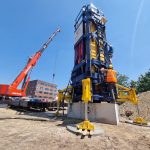
In a Static Load Test (SLT), the load cell sits on top of the pile head, beneath the hydraulic jack. As the jack extends and pushes against the reaction system, the load cell records the compressive force being transferred into the pile. Displacement gauges or LVDTs measure pile head movement simultaneously, and together these two data streams produce the load-settlement curve that defines pile performance.
The load cell reading and the jack pressure reading should agree closely throughout the test. If they diverge, it signals a problem with the jack calibration, an eccentric load, or friction in the system. Having both measurements is a useful quality check that a pressure transducer alone cannot provide.
In a Bi-directional test, a specially designed cell is cast into the pile at a predetermined depth. This cell applies load from within the pile, pushing the upper section upward and the lower section downward simultaneously. The force measured by the internal cell, combined with displacement measurements at multiple levels, allows engineers to construct a load-settlement curve equivalent to a conventional top-loaded static test.
What is the difference between a load cell and a pressure transducer?
A load cell measures force directly in units of kilonewtons or meganewtons. A pressure transducer measures fluid pressure in units of bar or pascal. In a hydraulic loading system, the pressure transducer monitors the oil pressure inside the jack, and the applied force is then calculated by multiplying that pressure by the jack’s effective piston area. A load cell bypasses that calculation entirely by measuring the actual force in the load path.
The practical difference matters in pile testing. A pressure transducer reading depends on the jack’s calibration being correct, the piston area being accurately known, and there being no significant friction in the jack’s seals. Any of these factors can introduce error. A load cell in the load path measures what is actually happening at the pile head, regardless of what the jack is doing internally.
For this reason, load cells and pressure transducers are often used together rather than as alternatives. The pressure transducer provides a continuous, real-time signal that is easy to monitor during loading. The load cell provides the authoritative force measurement that is used in the final analysis and reporting. If the two readings diverge beyond an acceptable tolerance, the test team can investigate before the discrepancy affects the results.
How accurate are load cells, and what affects their accuracy?
A well-calibrated, properly installed load cell typically achieves an accuracy of better than 0.5% of full scale under controlled conditions. In field conditions, total measurement uncertainty is usually within 1 to 2%, which is more than sufficient for pile load testing purposes. Several factors influence how close to that ideal the actual measurement gets.
- Calibration: Load cells must be calibrated against a traceable reference before use. Calibration certificates should be current, and the calibration should cover the full load range expected during the test.
- Eccentricity: If the load is not applied concentrically through the load cell, bending moments develop that the cell is not designed to measure. This introduces error and can damage the cell. Careful alignment of the loading system is important.
- Temperature: Strain gauge output is temperature-sensitive. In outdoor or offshore environments with significant temperature swings, temperature compensation is needed to maintain accuracy.
- Overloading: Applying a force beyond the rated capacity of the load cell can permanently deform the sensing element, shifting the calibration. Selecting a load cell with an appropriate capacity for the expected test load, including a safety margin, protects against this.
- Data acquisition quality: The signal conditioning and analogue-to-digital conversion in the data acquisition system contribute to the overall measurement chain. Low-resolution or poorly shielded equipment can introduce noise that degrades the final reading.
When should a load cell be used instead of other force measurement methods?
Use a load cell whenever you need a direct, independent measurement of the force actually applied to a structure. In pile load testing, this means using a load cell in any static or rapid load test where the load-settlement curve will form the basis of design decisions, regulatory compliance, or dispute resolution. Relying solely on jack pressure is acceptable for preliminary or routine checks but not for definitive capacity determination.
Load cells are particularly important in the following situations:
- When the jack is old, has not been recently calibrated, or has a history of seal wear that affects pressure readings
- When the test load is close to the pile’s expected capacity and accuracy at the upper end of the load range matters
- When the test results will be used for independent verification, regulatory submission, or contractual acceptance
- When multiple jacks are used in parallel and you need to confirm that load is being shared as intended
- When testing in tension, where the load path geometry makes pressure-based calculation less reliable
In Dynamic Load Testing (DLT), load cells are not used in the same way. Force at the pile head is derived from strain gauge measurements combined with the pile’s cross-sectional stiffness, rather than from a separate load cell in a loading rig. This is one reason why static and rapid load testing, which use load cells directly, produce a more straightforward and independently verifiable force measurement than dynamic methods.
How We Help with Load Cell-Based Pile Load Testing
We design and execute pile load testing programs where accurate force measurement is built into every stage of the process. Our approach to static and rapid load testing uses calibrated load cells as the primary force measurement instrument, giving you a direct, unambiguous record of the load applied to each pile throughout the test.
Here is what we bring to your project:
- Calibrated instrumentation: We use load cells that are calibrated to traceable standards and matched to the expected load range of your specific test program, onshore and offshore.
- Integrated data acquisition: Our systems record load cell output alongside displacement measurements in real time, so your team can monitor the load-settlement response as the test progresses.
- Static Load Testing (SLT): For projects where a direct, sustained load-settlement curve is needed, we set up and execute compression and tension tests with full load cell instrumentation and independent displacement monitoring.
- Rapid Load Testing (RLT) with StatRapid: Our in-house developed StatRapid system applies a controlled impulse load and measures force directly using a load cell, eliminating the stress wave effects that affect dynamic testing and delivering accuracy comparable to static testing at significantly lower cost and time.
- Expert interpretation: Raw load cell data only becomes useful when it is correctly interpreted. Our engineers analyze the full load-settlement record and provide clear, actionable conclusions about pile capacity and behavior.
- Offshore capability: We perform load cell-based pile testing in offshore environments, including for wind farm foundations, marine structures, and oil and gas platforms, where accurate force measurement is especially important given the cost of remediation.
If you want to discuss the right force measurement approach for your foundation testing program, contact our team to talk through your project requirements and the testing method that fits your pile type, soil conditions, and acceptance criteria.
Gerelateerde artikelen
- How does stand-alone data logging work during monopile installation?
- How does creep affect long-term pile settlement under load?
- What is the difference between compression and tension pile testing?
- What is the difference between a proof and ultimate load test?
- How is pile driving behaviour predicted before construction starts?