


A reference pile is selected based on its representativeness of the worst-case or most critical conditions on the site. The pile chosen should reflect the soil profile, pile geometry, and installation method that carry the greatest uncertainty or risk for the overall foundation design. Engineers use reference pile results to validate design assumptions before committing to full-scale production piling.
The sections below address the most common questions about reference pile selection, from the criteria that govern the choice to the timing of testing within the construction programme.
What criteria determine which pile becomes the reference pile?
A reference pile is selected based on its ability to represent the most demanding or uncertain conditions across the site. The pile must reflect the governing combination of soil profile, pile type, pile geometry, and installation method. If test results from this pile confirm adequate performance, engineers can apply those findings with reasonable confidence to the broader pile group.
The selection criteria typically include the following:
- Soil profile: The pile should be located where the soil conditions are weakest, most variable, or least well characterized by the site investigation data.
- Pile geometry: Length, diameter, and cross-section should match the production piles that carry the highest structural loads.
- Installation method: The reference pile must be installed using the same technique as the production piles, whether driven, bored, or vibro-installed, so that the test reflects realistic installation effects.
- Load transfer mechanism: Where the design relies primarily on end bearing, shaft friction, or a combination, the reference pile should be positioned where that mechanism is most difficult to predict from desk study alone.
- Structural sensitivity: Piles supporting critical structural elements, such as heavily loaded columns or offshore jacket legs, are strong candidates because the consequences of underperformance are greatest there.
In practice, the reference pile location is agreed between the geotechnical engineer, the structural engineer, and the foundation contractor before installation begins. The decision draws on borehole logs, cone penetration test profiles, and the pile design model to identify where uncertainty is highest.
How many reference piles are typically required for a load test programme?
Most pile load testing programmes include between one and three reference piles, though the exact number depends on site size, soil variability, pile type, and the applicable design standard. A single reference pile may be sufficient on a uniform site with a well-characterized soil profile, while a larger or more variable site typically requires two or more to give statistically meaningful results.
Several factors push the number higher:
- Significant soil variability across the site: If borehole data show distinct soil zones, each zone may need its own reference pile to avoid extrapolating results across conditions that are too different.
- Multiple pile types or diameters: Where the design uses more than one pile configuration, each distinct type generally warrants its own reference test.
- Regulatory or contractual requirements: Some standards and project specifications set minimum numbers of test piles as a proportion of the total pile count.
- High consequence of failure: On offshore wind foundations, oil and gas platforms, or major infrastructure projects, clients and certifying bodies often require more than one reference test to reduce reliance on a single data point.
On large-scale programmes, it is common to combine a small number of reference pile tests with a broader quality control programme using dynamic load testing across production piles. This approach balances the depth of information from reference testing with the efficiency of testing a statistically meaningful proportion of the installed pile group.
What is the difference between a reference pile and a sacrificial test pile?
A reference pile is a production pile that is load tested and then incorporated into the permanent structure, provided it passes the test. A sacrificial test pile is installed solely for testing purposes and is not part of the permanent foundation. The key distinction is whether the pile serves a structural function after testing is complete.
This difference has practical consequences for the design and planning of the test programme:
- Location: A reference pile must be positioned where it fits within the permanent pile layout. A sacrificial pile can be placed wherever it best represents the conditions of interest, including locations outside the building footprint.
- Load level: A sacrificial pile can be tested to failure, which gives the most complete picture of ultimate bearing capacity. A reference pile is typically tested to a proof load, usually 1.5 to 2 times the working load, to avoid damaging a pile that will remain in service.
- Cost and programme: Sacrificial piles add cost because they contribute nothing to the permanent structure. Reference piles make more efficient use of the testing budget because the pile itself has structural value.
- Data quality: Testing to failure on a sacrificial pile provides a full load-settlement curve, including post-peak behavior. Proof loading on a reference pile confirms capacity up to the test load but does not reveal the full failure mechanism.
Many programmes use both: a sacrificial pile tested to failure early in the programme to establish the full capacity envelope, followed by reference pile tests at proof load level to verify that production piles meet the design requirement.
How does soil variability across a site affect reference pile placement?
Soil variability directly controls how many reference piles are needed and where they should be placed. On a uniform site, results from one well-chosen reference pile can be applied across the full foundation area. On a variable site, a single reference pile may not represent conditions elsewhere, and applying its results too broadly introduces risk into the design.
When planning reference pile placement on a variable site, engineers typically take the following approach:
- Zone the site: Group borehole and CPT data into distinct soil units or zones based on stratigraphy, strength, and stiffness. Each zone with meaningfully different soil behavior is a candidate for its own reference pile.
- Identify the critical zone: Within each zone, select the location where the soil is weakest, most compressible, or most difficult to characterize. This is where the reference pile should be installed.
- Check interpolation limits: Consider how far results from a reference pile can reasonably be extrapolated. If the distance between reference piles and production piles is large relative to the scale of soil variability, additional testing may be warranted.
- Revisit placement after installation: Pile driving records, installation torque, or grout take during installation can reveal soil conditions that differ from the investigation data. If anomalies appear, the reference pile placement may need to be reconsidered.
On sites with pronounced lateral variability, such as reclaimed land, coastal areas with variable fill, or sites near geological boundaries, soil variability is one of the strongest arguments for increasing the number of reference piles rather than relying on a single test location.
Which load test method is used on a reference pile?
The load test method used on a reference pile depends on the pile type, the design objective, site logistics, and the level of certainty required. Static load testing is the most direct method and produces an unambiguous load-settlement curve. Rapid load testing offers a practical alternative where static testing is logistically difficult. Dynamic load testing is used where speed and cost are priorities, but it carries greater interpretive uncertainty for some pile types.
Static load testing on reference piles
Static load testing applies a sustained, controlled load to the pile head and measures displacement directly using load cells and displacement gauges. It provides the most straightforward evidence of pile capacity and load-settlement behavior, making it the preferred method when the design is governed by settlement, when regulatory requirements demand direct measurement, or when the pile type makes dynamic methods less reliable. The main limitation is logistical: a reaction system is needed, which adds time and cost, particularly offshore.
Rapid load testing on reference piles
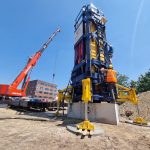
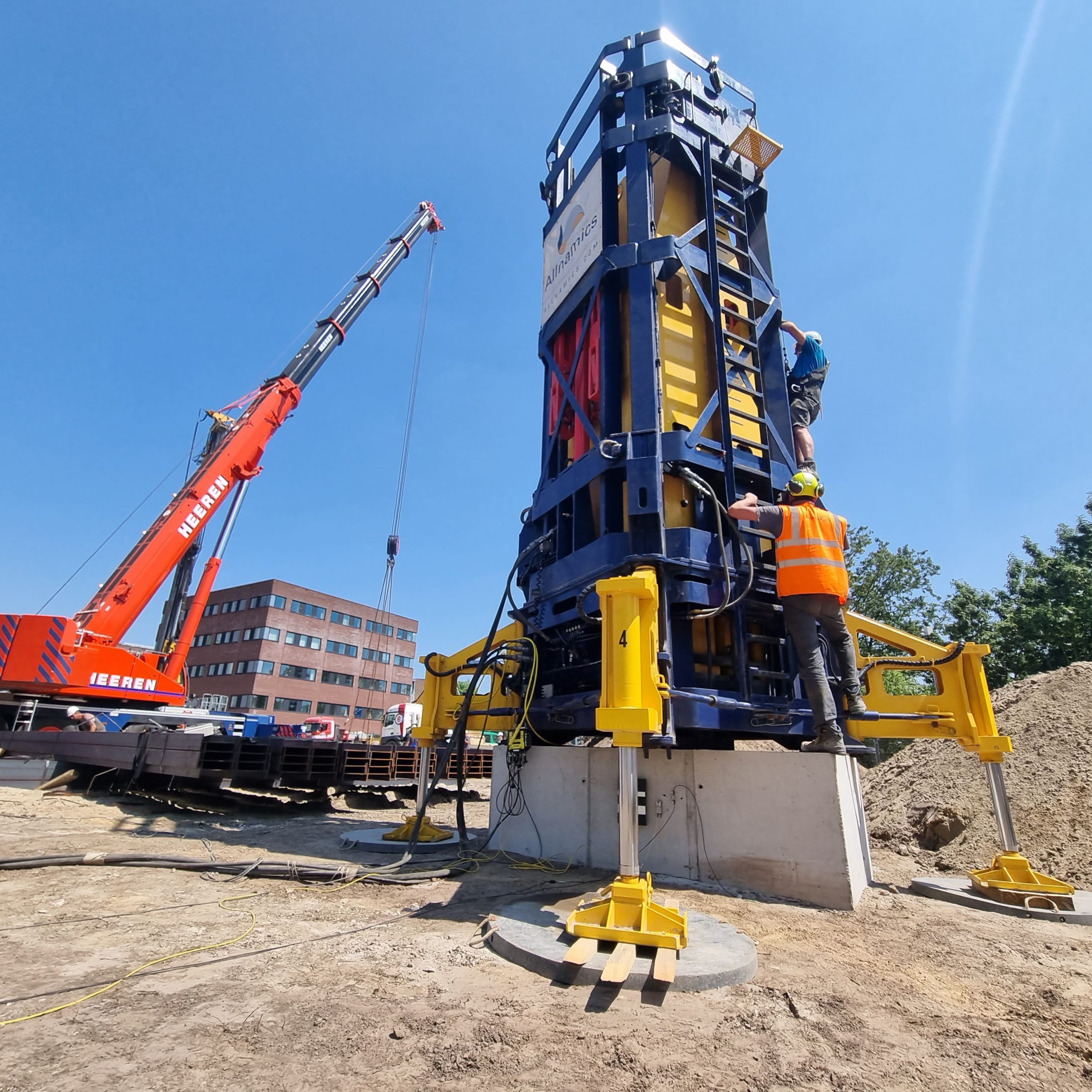
Rapid load testing, including Statnamic and StatRapid methods, applies an impulse load over a duration long enough to eliminate the stress wave effects that complicate dynamic testing. The result is a direct measurement of load and settlement that is significantly more accurate than dynamic testing for friction piles and cast-in-situ concrete piles. Rapid load testing is particularly useful where static testing is impractical but a higher level of accuracy than dynamic testing can provide is required.
Dynamic load testing on reference piles
Dynamic load testing measures strain and acceleration at the pile head during a hammer impact and derives bearing capacity through signal matching analysis. For end-bearing driven steel piles in granular soils, dynamic testing can achieve results within 10 to 20 percent of static test values. For bored piles or piles in cohesive soils, accuracy drops considerably, and dynamic testing should be supplemented with static or rapid load testing where the reference pile results will govern design decisions.
When should reference pile testing happen during the construction programme?
Reference pile testing should happen before production piling begins in earnest, so that results can influence the installation programme while there is still time to act on them. Testing after the majority of piles are installed removes the ability to adjust pile lengths, installation criteria, or design assumptions in response to what the test reveals.
The ideal timing follows this sequence:
- Install the reference pile early: The reference pile should be one of the first piles installed on the project, using the same equipment and method as production piles.
- Allow adequate setup time: For driven piles in fine-grained soils, pore pressures generated during installation need time to dissipate before testing. Testing too soon after installation will underestimate the long-term capacity. The required waiting period depends on soil type and pile dimensions, but is typically several days to several weeks.
- Test before production piling is complete: Results should be available and reviewed before the bulk of production piles are installed. This allows the design team to confirm or revise installation criteria, pile lengths, or acceptance criteria based on real performance data.
- Allow time for result review and decision-making: Build enough programme time after testing for the geotechnical engineer to analyse results, compare them against design predictions, and issue any revised instructions to the contractor.
On fast-moving projects, the temptation is to start production piling immediately and test later. This approach carries real risk: if the reference pile reveals a capacity shortfall or unexpected behavior, remediation of already-installed piles is far more expensive than adjusting the programme before installation proceeds. Early testing is an investment in programme certainty, not a delay.
How Allnamics Supports Reference Pile Selection and Testing
We work with clients at the planning stage to define a reference pile strategy that fits the project’s soil conditions, pile type, programme constraints, and risk profile. Our involvement covers the full process, from selection criteria through to test execution and result interpretation.
Specifically, we help you with:
- Reference pile location and number: We review your site investigation data, pile design, and structural layout to recommend where reference piles should be placed and how many are needed to give meaningful results.
- Test method selection: We advise on whether static load testing, rapid load testing, or dynamic load testing is most appropriate for your pile type and design objective, and we explain the accuracy and limitations of each option in your specific context.
- Test execution: Our teams perform pile load tests onshore and offshore, using calibrated equipment and experienced engineers to ensure reliable data collection.
- Signal matching and result interpretation: Where dynamic testing is used, our engineers perform signal matching analysis using AllWave-DLT to derive bearing capacity estimates with the smallest achievable bandwidth.
- Design feedback: We translate test results into clear recommendations for your design team and contractor, including revised installation criteria, safety factors, or recommendations for additional testing where results fall outside expected ranges.
- Programme integration: We help you schedule testing at the right point in the construction programme so that results are available before production piling is too far advanced to act on them.
If you are planning a pile load test programme and want to discuss the right approach for your project, contact our geotechnical engineering team for a direct conversation with an experienced geotechnical engineer.