


Choosing the right pile load testing method depends on your project’s soil conditions, pile type, required accuracy, available time, and budget. For most large-scale infrastructure and foundation projects, no single method fits every situation. The sections below walk through the main testing methods, how they compare, and the practical factors that guide the right choice.
What are the main types of pile load testing methods?
The main types of pile load testing methods are Static Load Testing (SLT), Rapid Load Testing (RLT), and Dynamic Load Testing (DLT). Each method applies load to a pile differently and measures the pile response to determine bearing capacity, stiffness, and structural integrity. The right method depends on the level of accuracy required, site constraints, and the project timeline.
Here is a brief overview of each approach:
- Static Load Testing (SLT): A slow, controlled load is applied directly to the pile head using kentledge weights or reaction piles. This is the most direct measurement of pile capacity and is widely accepted as the reference standard.
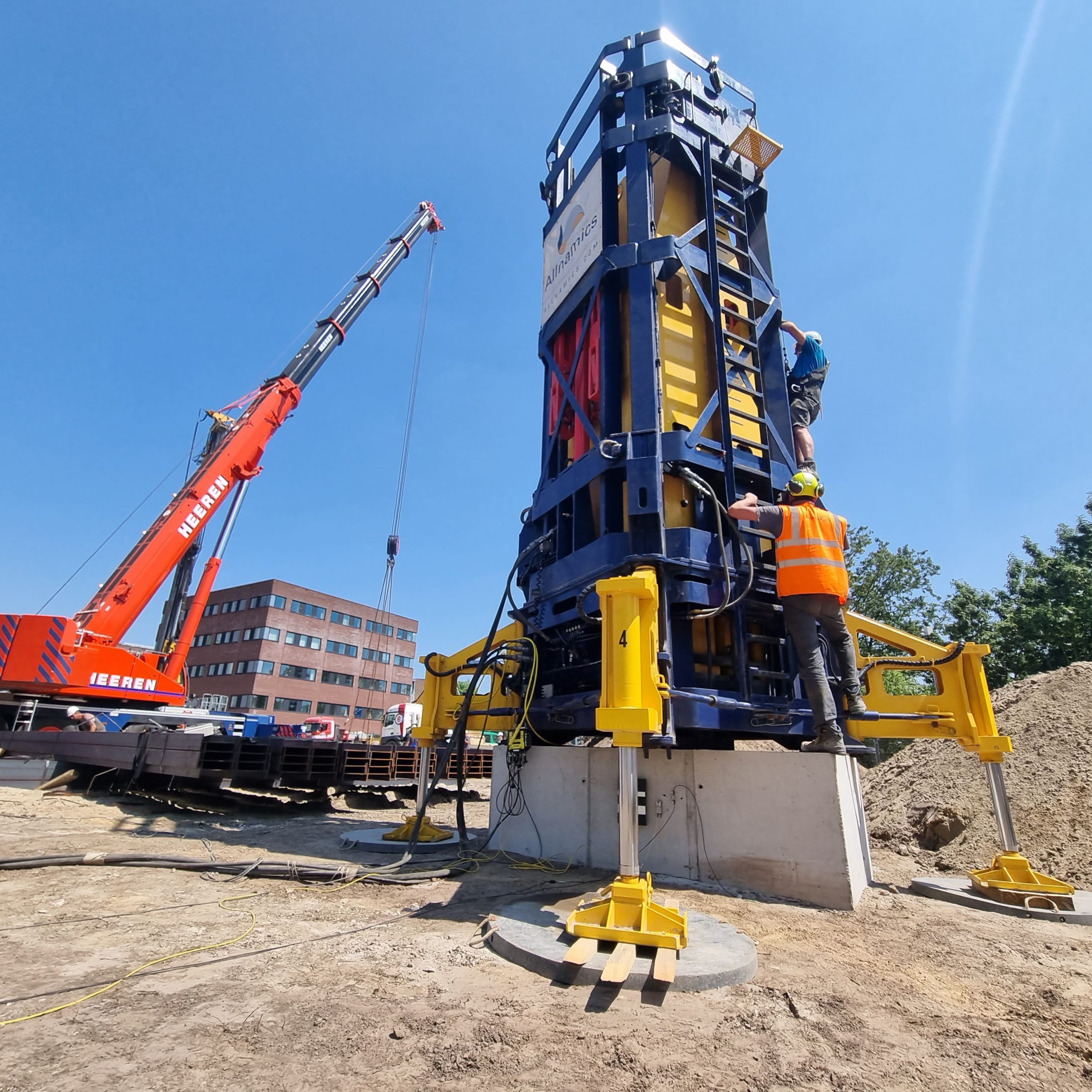
- Rapid Load Testing (RLT): A device applies a load pulse lasting between 50 and 200 milliseconds, longer than a hammer blow but shorter than a static test. Capacity is derived using analytical methods that account for inertia and damping.
- Dynamic Load Testing (DLT): A drop hammer strikes the pile head, and sensors measure force and velocity. Signal matching analysis then derives pile capacity and soil resistance distribution.
In practice, projects often combine methods. A small number of static tests may be used to calibrate a larger program of Rapid and/or dynamic tests, giving you both accuracy and efficiency at scale.
It should be noted that Pile Integrity Testing (PIT) is not a method for pile load testing. It is a low-strain test used to assess the structural integrity of a pile and gives no information whatsoever about load capacity. It detects defects, cracks, or changes in cross-section.
How does static load testing differ from dynamic load testing?
Static load testing applies a sustained, slow load directly to the pile and measures settlement over time, making it the most direct and reliable method for determining pile capacity. Dynamic load testing applies a brief impact and uses wave mechanics to infer capacity indirectly. The key difference is how the load is applied and how the results are interpreted.
Static testing gives you a direct force-displacement curve that reflects real pile behavior under working conditions. It requires significant setup, including reaction systems or kentledge, and can take days to complete per pile. The results are straightforward to interpret and are accepted by virtually all design codes and standards.
Dynamic testing is faster and more cost-effective, particularly when you need to test many piles across a large site. A trained engineer uses signal matching software to model the pile-soil system and back-calculate capacity from the measured wave response. The accuracy of dynamic testing depends heavily on the quality of the signal matching analysis and the experience of the engineer performing it. therefor making it highly user-dependent.
For projects where a small number of high-value piles carry critical loads, static testing (or rapid load testing) is often preferred. For production pile programs where consistency and speed matter, dynamic testing offers a practical and well-validated alternative, particularly when calibrated against at least one static test on the same site.
When should you use rapid load testing instead of static or dynamic methods?
Rapid load testing is most useful when static testing is logistically difficult and dynamic testing is not suitable for the pile type or soil conditions. It works well for all pile types, but particularly for large-diameter bored piles, CFA piles, and displacement piles in fine-grained soils where dynamic methods can underestimate capacity due to rate effects as well as potentially damage the pile shaft due to high peak stresses.
RLT occupies a practical middle ground. The load pulse duration is long enough to mobilize soil resistance more fully than a hammer blow, but the test setup is far simpler than a full static test. This makes it particularly valuable in the following situations:
- Large-diameter piles where generating sufficient dynamic energy with a drop hammer is impractical and potentially damaging to the pile shaft
- Sites with limited space or access that make kentledge or reaction pile setups difficult
- Offshore or marine environments where static testing logistics are prohibitive
- Projects requiring faster results than static testing allows, without sacrificing the quality of capacity data
- Soils with high damping characteristics where dynamic signal matching introduces greater uncertainty
Rapid load testing uses a reliable and straightforward direct methods (Unloading Point Method), whereas dynamic testing results require careful interpretation using more advanced signal matching (indirect and user dependent). Your geotechnical team should verify that the interpretation method used is appropriate for the soil profile on your site.
What factors determine which pile testing method is most appropriate?
The most appropriate pile load testing method is determined by pile type and size, soil conditions, required accuracy, number of piles to be tested, available time and budget, and site access constraints. No single factor drives the decision alone. You need to weigh all of them together.
Consider the following factors when selecting a method:
- Pile type and installation method: Driven piles are well-suited to dynamic testing during or after installation. Bored or CFA piles often require static or rapid load testing for reliable capacity data.
- Soil conditions: Cohesive soils with high damping and/or time dependent soil behavior can make dynamic signal matching less reliable. Static testing or (calibrated) Rapid testing may give more representative results in these cases.
- Required accuracy: Where design relies on a single or small number of critical piles, static testing or – for piles in granular soils – rapid testing provides the most defensible data. For large programs, dynamic testing calibrated against static tests or rapid testing is often sufficient.
- Number of piles: Testing 5 piles is a different challenge from testing 500. Dynamic testing and rapid testing scale efficiently; static testing does not.
- Timeline and budget: Static testing takes longer and costs more per pile. Dynamic and rapid methods reduce both, but especially dynamic testing requires qualified interpretation and remains user dependent.
- Site access: Offshore, marine, and confined urban sites may rule out certain methods entirely based on logistics.
How do project standards and codes influence the choice of testing method?
Project standards and codes directly influence which pile load testing methods are accepted, how many tests are required, and how results must be interpreted. In many jurisdictions, the design code specifies minimum testing requirements that your project must meet regardless of other preferences.
In Europe, Eurocode 7 (EN 1997) sets out requirements for pile testing and defines model factors that affect the number of tests needed to justify a given design. Static load testing typically allows the use of lower model factors, meaning fewer tests are needed to achieve the same level of confidence. Dynamic and Rapid testing are accepted under Eurocode 7 but may require extra tests (rapid) or a significantly larger number of tests (dynamic) or calibration against static results.
In other regions, standards such as ASTM D1143 (static testing), ASTM D7383 (rapid load testing), ASTM D4945 (high-strain dynamic testing), and ISO 22477 govern testing procedures and reporting. Some clients or authorities add their own requirements on top of these standards, particularly for critical infrastructure such as bridges, offshore platforms, or high-rise foundations.
Before finalizing your testing program, confirm which standards apply to your project, what the authority having jurisdiction will accept (or can be convinced of), and whether your chosen method requires supplementary calibration tests to satisfy code requirements. This step prevents costly program changes later in the project.
What are the most common mistakes when selecting a pile load testing method?
The most common mistakes when selecting a pile load testing method include choosing based on cost alone, failing to account for soil conditions, selecting a method that does not meet the applicable design code, and underestimating the effect of user dependency and the importance of qualified interpretation, especially in case of dynamic testing. Each of these errors can compromise the reliability of your foundation data.
Here are the mistakes that appear most frequently in practice:
- Choosing the cheapest option without considering suitability: Dynamic testing costs less per pile, but if it is not appropriate for your pile type or soil, the data may not support your design.
- Skipping calibration tests: Using dynamic testing without at least one static test for calibration reduces confidence in the results, particularly in variable or poorly characterized soil profiles.
- Ignoring code requirements early: Discovering that your chosen method does not satisfy the applicable standard after testing has begun forces expensive retesting or design revisions.
- Underestimating interpretation quality: Dynamic and rapid load testing results are only as reliable as the engineer interpreting them. Signal matching requires experience and site-specific knowledge.
- Testing too few piles: A testing program that is too small to capture variability across the site may miss weak piles or inconsistent installation quality.
- Not aligning the testing program with the design assumptions: If your design assumes a certain failure mechanism or load transfer profile, your testing method should be capable of confirming or challenging those assumptions.
How Allnamics Helps You Choose the Right Pile Testing Method
We work with project teams at every stage of the foundation testing process, from initial program design through to final reporting and design verification. Our role is to help you select the method that fits your specific pile type, soil conditions, code requirements, and project constraints, and then deliver results you can rely on.
Here is what we bring to your pile load testing program:
- Independent method selection advice: We assess your project conditions and recommend the most appropriate testing approach, whether that is static, dynamic, rapid, or a combination of methods.
- Full testing execution: We perform Static Load Testing, Dynamic Load Testing, Rapid Load Testing, and Pile Integrity Testing both onshore and offshore, using our own equipment and experienced engineers.
- Advanced signal matching and analysis: Our team uses the AllWave Software Package and decades of signal matching experience to deliver accurate, defensible capacity assessments from dynamic and rapid load tests.
- Code compliance support: We help you align your testing program with Eurocode 7, ASTM standards, ISO 22477, and project-specific requirements from the outset.
- Offshore and marine capability: We have extensive experience delivering pile testing programs in offshore wind, oil and gas, and marine infrastructure environments where logistics and access require specialist solutions.
If you are planning a foundation testing program and want to make sure you are using the right method for your project, contact our team to discuss your requirements. We will help you build a testing approach that gives you reliable data, meets your code obligations, and keeps your project on schedule.