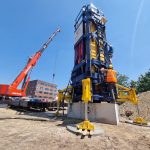



Pile load testing should be carried out at key decision points in a project: before full-scale construction begins, during installation to verify performance, and whenever foundation reliability is in question. The right timing depends on the project type, ground conditions, pile design, and applicable standards. Below, we answer the most common questions about when and why pile load testing is needed.
What triggers the need for pile load testing on a project?
Pile load testing is triggered when there is uncertainty about how a pile or foundation system will perform as-built and under real load conditions. This uncertainty can come from variable or poorly understood ground conditions, a new pile type or installation method, a design that pushes the limits of standard calculation methods, or a project where the consequences of foundation failure are significant.
In practice, several situations commonly trigger the decision to test:
- Complex or variable soil profiles where standard design assumptions carry higher risk
- Structures for which load-settlement behavior (= stiffness) is more important than pile capacity such as high-rise buildings, bridges, offshore platforms, or wind turbine foundations
- New pile types or installation techniques that lack a local track record
- Cost optimization goals where testing allows a more efficient design with fewer or shorter piles
- Contractual or regulatory requirements that mandate independent verification
- Unexpected behavior during installation, such as refusal, excessive settlement, or pile damage
Testing is not only a risk management tool. It also creates opportunities to optimize the foundation design, reduce material use, and lower overall project costs by confirming that piles perform better than conservative calculations predict.
At what stage of construction should pile load testing take place?
Pile load testing most commonly takes place in two phases: before full production piling begins (as a preliminary or trial pile test) and during or after installation (as a working pile test). The earlier testing occurs in the construction sequence, the more influence the results can have on design decisions and cost savings.
Preliminary pile testing happens before the main piling works and preferably also before the design is finalized. Trial piles are installed specifically for testing purposes, often to failure, so the results can validate or refine the design. This phase gives your team the most flexibility to adjust pile dimensions, spacing, or installation methods before committing to full production.
Working pile testing takes place on installed production piles, either during installation or after. Dynamic load testing, for example, can be performed during driving, providing real-time data on capacity and integrity without significantly interrupting the construction schedule. Static load testing on working piles typically occurs after a rest period to allow soil set-up, which can take days to weeks depending on soil type.
For time-sensitive projects, dynamic load testing during installation offers a practical way to gather performance data across multiple piles without the delays associated with static testing.
What are the different types of pile load tests available?
The main types of pile load tests are static load testing, dynamic load testing, and rapid load testing. Each method applies load differently, measures different responses, and suits different project conditions and budgets.
- Static Load Testing (SLT): The reference method. A physical load is applied slowly and incrementally to the pile head. It provides the most direct measurement of pile capacity and settlement behavior, but requires significant setup time and equipment.
- Dynamic Load Testing (DLT): A high-energy impact is applied to the pile head, and sensors measure strain and acceleration. Capacity is derived through signal matching analysis. It is faster and less expensive than static testing and can be performed on many piles in a single day.
- Rapid Load Testing (RLT): A load is applied over a period of 100 to 200 milliseconds, between the timescales of static and dynamic testing. Methods such as Statnamic and StatRapid fall into this category. RLT is particularly useful where static testing is impractical and dynamic testing is not suitable.
In practice, projects often combine methods. A small number of static tests may be used to calibrate a larger program of Rapid and/or dynamic tests, giving you both accuracy and efficiency at scale.
Is should be noted that Pile Integrity Testing (PIT) is not a method for pile load testing. It is a low-strain test used to assess the structural integrity of a pile and gives no information whatsoever about load capacity. It detects defects, cracks, or changes in cross-section.
How many piles should be tested on a foundation project?
The number of piles to test depends on the total number of piles installed, the variability of ground conditions, the consequences of failure, and the applicable design standard. Most standards specify a minimum percentage of working piles to be tested, with higher percentages required when ground conditions are uncertain or the structure is particularly sensitive.
As a general guide:
- Static load tests are typically performed on a small number of piles, often 1 to 3 per project or per distinct ground zone, due to cost and time constraints.
- Dynamic load tests need to be performed on a much larger proportion of piles, sometimes 5% to 10% or more, because of their generally lower accuracy and reliability, that are kind of compensated by their fast test progress and lower cost per test.
- Rapid load tests need to be performed on a larger proportion of piles, usually 3 per project or per distinct ground zone or approx. 3% to 5% of the total number of piles, depending on the scale of the project.
When ground conditions vary significantly across a site, your team should consider testing piles in each distinct zone rather than distributing tests evenly across the whole site. This gives a more representative picture of actual performance.
It should be noted that pile testing is about design safety and that design safety is about reducing uncertainties (for instance about variation of soil properties or about the as-built pile properties) rather than checking the margin between capacity and design load for an individual pile. So design safety is served better by testing more piles with lower loads and a bit less accuracy, than by testing a small number of piles with a very accurate method and a high load!
Integrity tests are often performed on a high percentage of piles, sometimes 100%, because they are fast and inexpensive. Be aware that integrity tests give no information whatsoever about load capacity
When is pile load testing required by standards or regulations?
Pile load testing is required by standards or regulations when the design relies on test results to justify the chosen pile capacity, when the structure falls into a higher geotechnical category, or when local building codes or project specifications explicitly mandate it. In Europe, Eurocode 7 is the primary standard governing this requirement.
Under Eurocode 7, piles are classified into geotechnical categories based on structural complexity and ground conditions. Higher categories require more rigorous verification, which typically includes load testing. The standard distinguishes between designs based on static calculation or load test results, with the latter generally allowing higher design loads for the same pile.
Beyond Eurocode 7, other frameworks that commonly require or strongly recommend pile load testing include:
- ISO standards for offshore structures
- National annexes to Eurocode 7, which vary by country
- Project-specific specifications set by clients, insurers, or certifying bodies
- Requirements from port authorities, transportation agencies, or other public sector clients
In 2026, the revised Eurocode 7 framework continues to place greater emphasis on observational methods and test-based design, reinforcing the role of pile load testing as a standard part of foundation verification rather than an optional extra.
Can pile load testing be used to assess existing foundations?
Yes, pile load testing can be used to assess existing foundations. This is relevant when a structure is being repurposed, when the original design documentation is incomplete or unavailable, when damage or deterioration is suspected, or when a developer wants to reuse existing piles rather than installing new ones.
Testing existing foundations serves several purposes:
- Capacity verification: Confirming whether existing piles can support a new or increased load, for example when a building is being extended or converted
- Integrity assessment: Detecting damage, corrosion, or section loss in piles that may have been affected by ground movement, construction activity, or aging
- Foundation reuse: Providing the technical evidence needed to justify reusing existing piles, which reduces construction waste, lowers carbon emissions, and cuts costs
- Forensic investigation: Understanding the cause of settlement, cracking, or structural distress in an existing building
Rapid load testing methods are particularly well suited to existing foundation assessments because they require minimal excavation and can often be performed with limited access, while providing reasonably accurate and reliable results. Integrity testing can be applied to a large number of piles quickly, helping your team prioritize which piles need further investigation.
How Allnamics Supports Your Pile Load Testing Decisions
We work with foundation contractors, civil engineers, developers, and public sector clients at every stage of a project where pile load testing plays a role. Whether you need to plan a testing program before piling begins, verify performance during installation, or assess an existing foundation, we provide the expertise and equipment to get reliable answers.
Our support covers:
- Test program design — advising on which methods to use, how many piles to test, and when to test them based on your project conditions and applicable standards
- Dynamic Load Testing (DLT) — performed during or after installation, with signal matching analysis to determine capacity and detect integrity issues
- Static Load Testing (SLT) — for projects requiring the highest level of direct capacity verification
- Rapid Load Testing (RLT) — including Statnamic and our own StatRapid method, suited to situations where static testing is impractical
- Pile Integrity Testing (PIT) — for structural assessment of new and existing piles
- Foundation reuse studies — combining testing and analysis to support sustainable redevelopment decisions
- Independent technical review — providing expert validation of test results and design assumptions for complex or high-stakes projects
If you are planning a foundation project and want to understand which pile load testing approach fits your situation, contact us to discuss your project. We will help you define a testing strategy that gives you the confidence you need without unnecessary cost or delay.