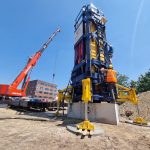



Pile load testing works by applying a measured force to a foundation pile and recording how the pile responds, giving engineers direct evidence of load-bearing capacity and structural integrity. On large infrastructure projects, this testing happens before and during construction to verify that the foundation design performs as intended under real site conditions. The sections below cover the main methods, how each one works, and what the results mean for your project.
What methods are used in pile load testing?
The three main methods used in pile load testing on infrastructure projects are Static Load Testing (SLT), Dynamic Load Testing (DLT), and Rapid Load Testing (RLT). Each method applies force to a pile differently and suits different project conditions, timelines, and budget constraints. Most large infrastructure projects use a combination of these methods depending on the pile type, site access, and the level of detail required.
Static load testing applies a slow, sustained load directly to the pile head and measures settlement over time. Dynamic load testing uses the stress waves generated by a hammer impact to calculate capacity. Rapid load testing falls between the two, applying a force pulse that lasts long enough to separate inertia effects from soil resistance. The choice of method depends on factors like pile dimensions, required accuracy, available reaction systems, and programme constraints.
How does static load testing work on infrastructure projects?
Static load testing works by physically loading a pile to a target force, typically using hydraulic jacks reacting against kentledge weights or anchor piles, and measuring the pile’s settlement at each load increment. The test follows a defined loading sequence, holding each load stage for a set period before stepping up, until the pile reaches the required test load or shows signs of failure.
On large infrastructure projects such as bridges, tunnels, port structures, and high-rise foundations, static load testing is often carried out on preliminary test piles before the main installation programme begins. This allows the design to be confirmed or refined before committing to hundreds of production piles. The test produces a load-settlement curve that directly shows how the pile behaves under working load and ultimate conditions.
The main advantage of static load testing is that it provides the most direct measurement of pile capacity available. No signal processing or analytical model stands between the applied load and the measured response. For this reason, it remains the reference standard against which other methods are calibrated. The main limitation is cost and time: setting up a reaction system for very high loads on large-diameter piles requires significant equipment and preparation.
How does dynamic load testing differ from static load testing?
Dynamic load testing differs from static load testing in how the load is applied and how capacity is calculated. Instead of a slow, sustained force, dynamic load testing uses a drop hammer or pile driving hammer to strike the pile head. Sensors attached to the pile measure strain and acceleration during the impact, and these signals are analysed using wave equation methods to derive bearing capacity, soil resistance distribution, and pile integrity.
The key distinction is speed and cost. A dynamic load test can be completed in a fraction of the time required for a static test, and it requires no reaction system. This makes it practical to test a much larger proportion of piles on a project, including production piles during or after installation. The trade-off is that the result depends on the quality of the signal analysis and the assumptions made about soil behaviour during the high-strain event.
Dynamic load testing is particularly well suited to driven piles, where the installation hammer can double as the test device. For bored or cast-in-place piles, a separate drop hammer is used. When the results need to be validated, a static load test on a nearby pile provides the calibration reference. On large projects, it is common to run a programme that combines a small number of static tests with a larger number of dynamic tests to achieve both accuracy and coverage.
When is rapid load testing the right choice?
Rapid load testing is the right choice when you need a result that is more representative than dynamic testing but faster and less expensive than static testing. The method applies a force pulse lasting between 50 and 200 milliseconds, long enough for the pile to mobilise soil resistance in a way that closely resembles static behaviour, while still being short enough to complete efficiently on site.
Rapid load testing suits large-diameter bored piles, CFA piles, and displacement piles where setting up a full static reaction system would be impractical or disproportionately expensive. It is also useful in situations where site access limits the use of heavy kentledge, such as on water, in confined urban areas, or on slopes. The Statnamic device is one widely used system for delivering rapid load tests, and the StatRapid method extends this capability to smaller pile sizes and tighter site conditions.
The results require a signal separation method to remove inertia and damping effects from the measured force, but when this is done correctly, the derived static capacity correlates well with static load test results. Rapid load testing is increasingly used as the primary verification method on projects where programme pressure is high and the pile population is large.
What data does pile load testing produce for infrastructure engineers?
Pile load testing produces data on load-bearing capacity, load-settlement behaviour, soil resistance distribution along the pile shaft and at the toe, and pile structural integrity. The specific outputs depend on the method used, but together they give engineers a complete picture of how a pile performs under load and whether it meets the design requirements.
From a static load test, you receive a load-settlement curve showing elastic and plastic deformation at each load stage, the yield point, and the ultimate capacity. From a dynamic load test, you receive a CAPWAP or similar signal matching analysis that separates shaft friction from end bearing, identifies any damage in the pile shaft, and estimates the equivalent static capacity. Rapid load testing produces a force-displacement loop from which static capacity is derived after applying a correction for dynamic effects.
This data feeds directly into foundation design decisions. If the tested capacity exceeds the design requirement, you may be able to reduce pile lengths or spacing across the project, generating significant cost savings. If the capacity falls short, the data pinpoints whether the shortfall is in shaft friction, end bearing, or pile condition, which guides the remediation approach. For infrastructure projects with long operational lifespans, the testing record also becomes part of the asset documentation used in future inspections and assessments.
How many piles need to be tested on a large infrastructure project?
The number of piles that need to be tested on a large infrastructure project depends on the project type, the geotechnical variability of the site, the pile installation method, and the applicable design standard. Most standards and specifications require a minimum percentage of production piles to be tested dynamically, with a smaller number of static or rapid load tests on preliminary or working piles to establish the reference capacity.
As a general guide, dynamic load testing programmes on large projects typically cover between 1% and 5% of production piles, with higher percentages applied where ground conditions are variable or where the consequences of foundation failure are severe. Static load tests are usually limited to a small number of preliminary test piles, often two to five per distinct geotechnical zone, because of the time and cost involved.
Several factors push the required number higher:
- High geotechnical variability across the site, where soil conditions change significantly over short distances
- New pile types or installation methods that have not been used in similar ground conditions before
- Critical structures such as bridge foundations, offshore platforms, or high-rise cores where the consequences of underperformance are severe
- Contractor quality assurance requirements that specify testing rates independently of the design standard
- Regulatory or client requirements that set minimum testing percentages regardless of site conditions
On very large projects, the testing programme is often phased. Early tests on preliminary piles inform the design and installation parameters, mid-programme tests confirm that production piles are meeting expectations, and end-of-programme tests provide final verification before the structure is loaded. This phased approach gives you the most useful information at each decision point without over-testing where conditions are already well understood.
How Allnamics Supports Pile Load Testing on Infrastructure Projects
We work with infrastructure developers, contractors, and engineering consultancies at every stage of a pile load testing programme, from method selection and test design through to data analysis and reporting. Our team has direct experience with all three main testing methods across a wide range of pile types, ground conditions, and project scales, both onshore and offshore.
Here is what we bring to your project:
- Method selection and programme design: We help you choose the right combination of static, dynamic, and rapid load testing based on your pile type, site conditions, programme, and budget, so you get the data you need without unnecessary cost or delay.
- On-site testing and monitoring: Our engineers carry out Dynamic Load Testing, Static Load Testing, Rapid Load Testing, and Statnamic testing directly on site, using our own equipment and following applicable standards.
- Signal analysis and capacity assessment: We perform CAPWAP and equivalent signal matching analyses to extract reliable capacity and integrity data from dynamic and rapid load test records.
- Pile integrity testing: Where structural condition needs to be verified independently of capacity, we carry out Pile Integrity Testing (PIT) to identify anomalies in the pile shaft.
- Reporting and design support: We deliver clear, well-documented reports that your design team can use directly to confirm or refine the foundation design, and we are available to discuss findings with your engineers and clients.
- Proprietary technology: Our in-house developed StatRapid system and the AllWave Software Package give us additional capability for rapid load testing and pile driving simulation that supports both testing programmes and drivability studies.
If you are planning a pile load testing programme for an infrastructure project and want to discuss the right approach for your site and schedule, contact our team to talk through the options.