


Foundation reuse reduces material use in construction by eliminating the need to manufacture, transport, and install new concrete and steel piles. When existing foundations are verified as structurally sound and capable of carrying new or equivalent loads, they can be incorporated directly into a new structure, removing the demand for virgin materials entirely. The sections below unpack the specific materials saved, the carbon benefits, the assessments involved, and the project types where reuse delivers the greatest value.
What materials are saved when an existing foundation is reused?
Reusing an existing foundation saves the concrete, steel reinforcement, and in some cases timber, that would otherwise be needed to construct a new foundation system from scratch. For a typical building with a piled foundation, this means avoiding the production of large volumes of reinforced concrete and structural steel, both of which are among the most resource-intensive materials in construction.
The savings are not limited to the pile elements themselves. Reuse also eliminates the need for:
- Pile caps and connecting structures that tie new piles to the building frame
- Grout, casing, and drilling fluids used during bored pile installation
- Temporary works materials such as sheet piling or dewatering systems required to create working conditions for new pile installation
- Aggregate and cement for concrete production, both of which require significant extraction and processing
In dense urban environments, where foundations often consist of hundreds or even thousands of individual piles, the cumulative material savings can be substantial. A redevelopment project that reuses an existing pile grid avoids not just the raw materials but also the packaging, transport, and on-site handling of those materials, reducing the overall resource footprint of the project considerably.
How does foundation reuse reduce carbon emissions in construction?
Foundation reuse reduces carbon emissions by avoiding the embodied carbon locked into the production of new concrete and steel. Concrete production is responsible for a significant share of global industrial carbon output, and steel manufacturing is similarly carbon-intensive. When an existing foundation is reused, the carbon already embedded in those materials is retained in service rather than being demolished and replaced.
The carbon reduction operates across several stages of the construction process:
- Manufacturing: No new cement, aggregate, or steel needs to be produced for the foundation system
- Transport: Fewer deliveries of heavy materials to site reduce fuel consumption and associated emissions
- Installation: Pile driving or boring operations, which require heavy plant and machinery, are either reduced or eliminated entirely
- Demolition and disposal: Existing piles that would otherwise be broken out and removed generate waste concrete and steel that must be processed and transported off site
Decarbonization in the deep foundations industry increasingly recognizes that reuse is the most sustainable option available, ahead of even more efficient new designs using lower-carbon materials. A more efficient new foundation still requires production and installation; a reused foundation requires neither. For developers and contractors working toward net-zero targets or reporting under carbon reduction frameworks, foundation reuse offers one of the highest-impact interventions available at the structural level.
What geotechnical assessments determine whether a foundation can be reused?
Determining whether an existing foundation can be reused requires a combination of structural integrity assessment, geotechnical investigation, and load capacity verification. The goal is to establish whether the existing piles or foundation elements can safely carry the loads imposed by the new structure, both in terms of bearing capacity and long-term settlement behavior.
Structural integrity assessment
Before any load capacity analysis, engineers need to confirm the physical condition of the existing foundation. Pile integrity testing, such as Sonic Integrity Testing, uses stress wave measurements to detect discontinuities, cracks, or reductions in cross-section along the pile shaft. This non-destructive approach gives engineers a reliable picture of pile condition without excavation. Where integrity testing reveals anomalies, further investigation, such as coring or excavation, may be needed to confirm the nature and extent of any damage.
Geotechnical and load capacity verification
Once structural integrity is confirmed, the bearing capacity of the existing piles must be verified against the demands of the new structure. This typically involves reviewing original design records, conducting new soil investigations to assess whether ground conditions have changed, and in many cases performing a pile load test on representative piles. A pile load test provides direct, measured evidence of how the existing foundation performs under load, which is far more reliable than relying solely on historical documentation or predictive models. Where original records are incomplete or unavailable, load testing becomes particularly important as the primary source of performance data.
The assessment process also considers whether the new structure will impose different load patterns, eccentricities, or dynamic loads compared to the original design. A foundation that performed well under a previous building may need supplementary piles or strengthening measures if the new structure is taller, heavier, or differently configured.
When is foundation reuse not possible despite good structural condition?
Foundation reuse is not always possible even when existing piles are structurally intact. The most common barrier is a mismatch between the load-bearing capacity of the existing foundation and the demands of the new structure. If the new building is significantly heavier, taller, or differently loaded than its predecessor, the existing piles may simply not have sufficient capacity, regardless of their physical condition.
Other situations where reuse may not be viable include:
- Pile layout incompatibility: The grid spacing or pile positions of the existing foundation do not align with the structural grid of the new building, making integration technically impractical
- Changed ground conditions: Subsidence, contamination, groundwater changes, or adjacent construction activity may have altered the soil behavior around the existing piles in ways that reduce their reliability
- Insufficient documentation: Where original design records, pile schedules, or installation data are missing, it may not be possible to establish the design assumptions with enough confidence to justify reuse without extensive and costly testing
- Regulatory or planning constraints: Some jurisdictions or project types require new foundations to meet current design standards, which may not be achievable by verifying and reusing older foundation systems
- Pile type limitations: Certain pile types, particularly older timber piles or unreinforced concrete piles, may not be suitable for reuse under modern load requirements even if they appear intact
In practice, a hybrid approach is often the most pragmatic outcome: reusing the portions of the existing foundation that can be verified and supplementing with new piles where capacity or layout gaps exist. This still delivers meaningful material and carbon savings compared to full replacement.
How does foundation reuse compare to full replacement in cost and sustainability?
Foundation reuse is generally more sustainable and cost-competitive than full replacement, but the comparison depends heavily on the condition of the existing foundation, the complexity of the assessment process, and the demands of the new structure. When reuse is feasible, it typically delivers lower overall project costs by eliminating the expense of demolishing existing piles, procuring new materials, and executing a full installation program.
From a sustainability perspective, reuse outperforms replacement across all major indicators:
- Embodied carbon: Reuse avoids the carbon cost of new material production; replacement generates both demolition waste and new production emissions
- Material consumption: Reuse retains existing resources in service; replacement consumes new raw materials and generates demolition waste requiring processing and disposal
- Construction disturbance: Reuse reduces on-site activity, noise, vibration, and disruption to neighboring properties and infrastructure
- Programme duration: Avoiding a full piling program can shorten the construction programme significantly, reducing time-related costs and site overheads
The upfront investment in geotechnical assessment and pile load testing is the primary cost associated with a reuse strategy. This investment is typically a fraction of the cost of a new piling program and is recovered quickly through savings on materials, plant, and programme time. Where assessments reveal that reuse is not viable, the investigation cost still provides valuable data that informs the replacement design, so the expenditure is rarely wasted.
Which construction project types benefit most from foundation reuse?
Foundation reuse delivers the greatest benefit in urban redevelopment projects, where existing buildings are demolished and replaced with new structures on the same footprint. In these situations, the existing foundation is already in place, the ground conditions are known from previous construction, and the cost and disruption of installing new piles in a constrained urban environment are high. Reusing the existing foundation avoids all of these challenges simultaneously.
Project types that benefit most include:
- Urban regeneration and brownfield development: Former industrial or commercial sites where substantial foundation systems already exist and new development is planned on the same or adjacent footprints
- Building repurposing and change of use: Converting existing structures to new uses, such as offices to residential, where the structural loads may change but the foundation can be verified and adapted
- Historic building renovation: Projects where preserving the existing structure above ground makes it logical to retain and verify the foundation below
- Infrastructure asset management: Bridges, quay walls, and port structures where the substructure is assessed for continued service life rather than replaced
- Phased development: Sites where an earlier phase of construction left foundations in place that can be incorporated into a subsequent phase
Public sector organizations, municipalities, and property owners managing existing building stock also benefit significantly from foundation reuse strategies, particularly where sustainability reporting, carbon reduction commitments, or budget constraints make full replacement difficult to justify.
How We Help with Foundation Reuse
We support clients through every stage of a foundation reuse assessment, from initial feasibility to full technical verification. Our approach combines decades of experience in pile testing and foundation engineering with the advanced tools needed to give you reliable, defensible answers about whether an existing foundation can carry new loads safely.
When you engage us for a foundation reuse study, we can provide:
- Foundation inspection and condition assessment to determine the current status of your existing piles and foundation elements
- Pile integrity testing using Sonic Integrity Testing and other non-destructive methods to identify any structural anomalies without excavation
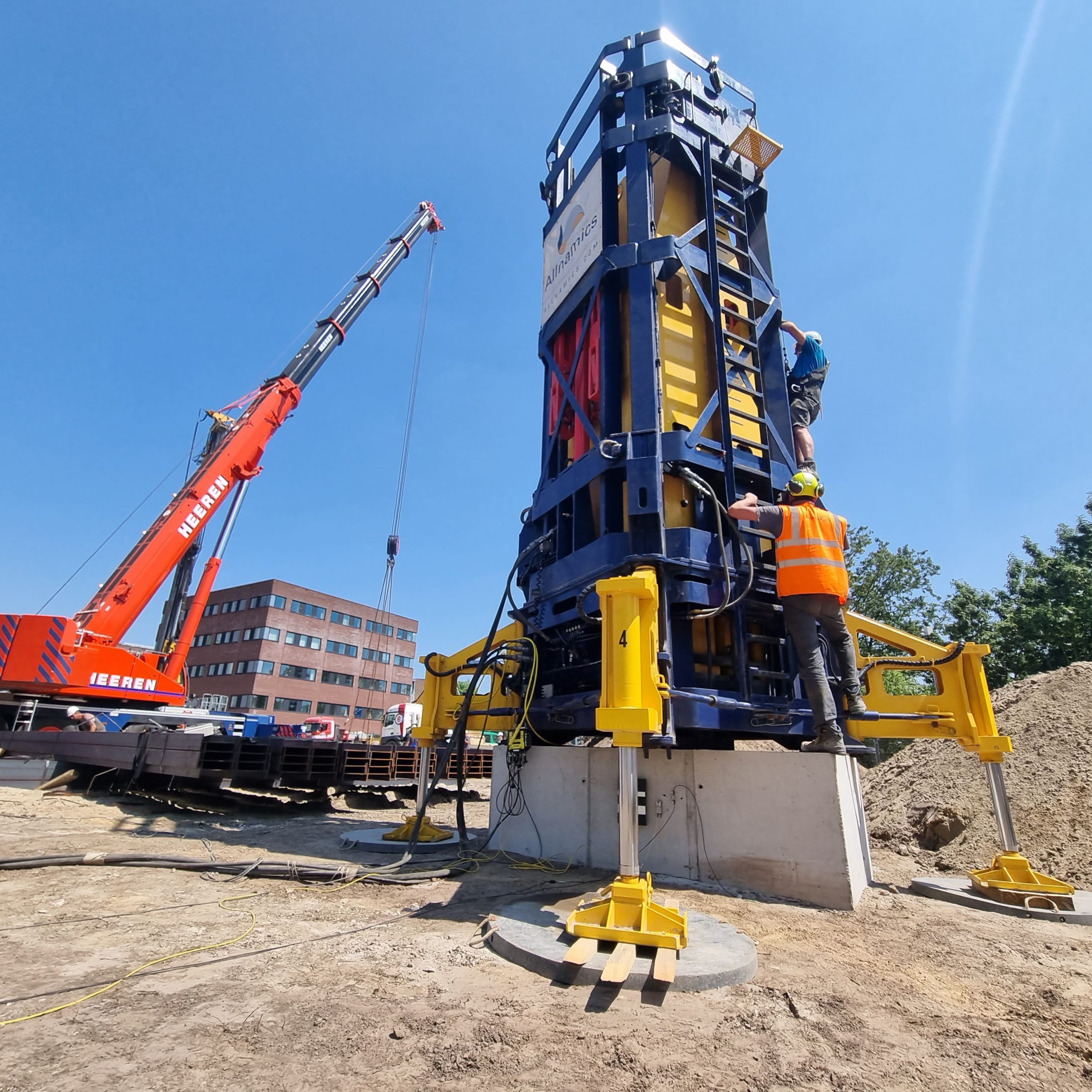
- Pile load testing, including Dynamic Load Testing, Rapid Load Testing, and Static Load Testing, to verify the actual bearing capacity of existing piles under measured conditions
- Geotechnical review and soil investigation to assess whether ground conditions support the loads imposed by the new structure
- Independent technical advice on whether reuse is viable, what supplementary measures may be needed, and how to document the assessment for regulatory or planning purposes
- Decarbonization consulting to help you quantify the carbon and material savings achieved through reuse and incorporate these into your sustainability reporting
Whether your project involves a single building or a large-scale urban redevelopment, we can help you determine whether foundation reuse is a realistic option and guide your team through the technical process of making it happen. Contact us to discuss your project and find out how we can support your foundation reuse assessment.