


What is the StatRapid method and how does it work?
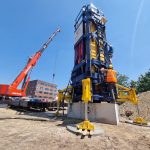
The StatRapid method is a form of Rapid Load Testing that applies a controlled impulse load to a pile over a duration long enough to eliminate stress wave effects, allowing direct and accurate measurement of pile bearing capacity and load-settlement behavior. Developed as an evolution of the Statnamic method, StatRapid is capable of generating test loads up to 65 MN and, in some configurations, up to 150 MN, making it suitable for large-diameter and high-capacity foundation piles. The sections below explain how the method works, how it compares to other pile load test approaches, and when it is the right choice for your project.
How does the StatRapid method measure pile capacity?
The StatRapid method measures pile capacity by applying a controlled impulse load directly to the pile head and recording both the applied force and the resulting pile head displacement simultaneously. Because the load duration is significantly longer than in Dynamic Load Testing, stress wave effects within the pile are eliminated, and the measurement reflects the actual static soil resistance rather than a dynamic approximation.
The impulse is generated by a purpose-built device that releases a controlled force over a period typically in the range of 100 to 200 milliseconds. This duration is long enough that the entire pile moves as a rigid body during the test, which is the condition that makes direct capacity measurement possible. A load cell records the applied force, and displacement transducers or other sensors capture pile head movement throughout the loading event.
Because both force and displacement are measured directly and independently, the resulting load-settlement curve does not depend on signal matching or complex post-processing models. The raw data already contains the information needed to determine bearing capacity. A correction is applied to account for the inertia of the pile and the damping behavior of the soil under rapid loading conditions, but this correction is straightforward and well-established in the method’s analytical framework.
For test loads up to approximately 20 MN, the Statnamic method is often used. When higher loads are required, the StatRapid device is the preferred choice, with capacity reaching up to 65 MN and, in some configurations, up to 150 MN. This makes StatRapid particularly relevant for large offshore foundations, high-capacity bored piles, and other situations where conventional testing equipment cannot generate sufficient load.
What’s the difference between StatRapid, Static Load Testing, and Dynamic Load Testing?
The key distinction between these three pile load test methods lies in how the load is applied and how the results are interpreted. Static Load Testing (SLT) applies a sustained, slowly increasing load. Dynamic Load Testing (DLT) applies a high-energy hammer impact lasting only milliseconds. StatRapid sits between them: it applies a controlled impulse over a much longer duration than DLT, long enough to eliminate stress wave effects while still being far faster and more practical than SLT.
Static Load Testing
SLT is the most direct method. Force and displacement are measured under a sustained load, producing a clear load-settlement curve without the need for analytical models. It captures time-dependent behavior, including creep and long-term settlement, which is particularly relevant in cohesive soils. The limitation is logistical: SLT requires a reaction system such as kentledge dead weight, tension anchors, or a reaction frame, which adds significant cost, time, and complexity, especially offshore.
Dynamic Load Testing
DLT applies a hammer blow lasting only a few milliseconds. Force and velocity are measured at the pile head, and bearing capacity is derived through signal matching analysis using software such as AllWave-DLT. This makes DLT faster and less expensive than SLT, but the results depend on the quality of the signal matching process and the experience of the engineer performing it. DLT is well-suited to driven steel piles with uniform cross-sections in granular soils, but its accuracy decreases for cast-in-situ concrete piles, friction piles, and cohesive soils.
StatRapid and Rapid Load Testing
StatRapid combines the practical advantages of DLT with the measurement directness of SLT. No reaction frame, anchors, or dead weight are needed. The results are not user-dependent in the way that signal matching is, because force and displacement are measured directly. This removes a significant source of interpretive variability. For projects where DLT accuracy is insufficient but full SLT logistics are impractical, StatRapid provides a reliable middle path.
What types of piles and projects is StatRapid suitable for?
StatRapid is suitable for a wide range of pile types and project contexts, particularly where high test loads are required or where the limitations of Dynamic Load Testing make it a poor fit. It is especially well-matched to cast-in-situ concrete piles, bored piles, and large-diameter foundation piles where DLT would impose damaging impact stresses or produce unreliable results due to variable cross-sections.
Because StatRapid applies a lower peak stress than a DLT hammer blow, it is safer for concrete piles that cannot withstand high-impact loading. The method also avoids the interpretive uncertainty that comes with signal matching on piles with non-uniform cross-sections or variable concrete quality, both of which are common characteristics of bored and cast-in-situ piles.
In terms of project type, StatRapid is relevant across a broad range of sectors:
- Offshore wind and energy foundations where large-diameter monopiles or jacket foundations require high test loads that exceed the range of Statnamic equipment
- Infrastructure projects such as bridges, viaducts, and tunnels where high-capacity bored piles are common and SLT logistics are difficult to arrange
- Port and marine structures where pile capacities are high and access constraints limit the use of heavy reaction systems
- Urban construction and real estate development where bored piles or continuous flight auger piles are used and space for SLT equipment is limited
- Foundation reuse assessments where existing piles need to be load-tested without the infrastructure for a full static test
StatRapid can be performed both onshore and offshore, and it scales from smaller micropiles up to very large foundation elements. The method is particularly valuable when your project requires a reliable pile load test result but the logistical or structural constraints of SLT or DLT make those methods impractical.
How is StatRapid data analyzed and interpreted?
StatRapid data is analyzed by processing the directly measured force and displacement signals to produce a load-settlement curve, with a correction applied to account for pile inertia and soil damping effects during the rapid loading event. The result is a static equivalent load-settlement relationship that can be interpreted in the same way as a conventional static load test result.
During the test, the applied force, pile head displacement, and acceleration are recorded continuously throughout the loading impulse. The inertia force, which is the product of the pile mass and its acceleration, is subtracted from the measured applied force to isolate the soil resistance component. A damping correction is then applied to account for the rate-dependent component of soil resistance that occurs under rapid loading but would not be present under static conditions.
This correction is based on established analytical methods developed specifically for Rapid Load Testing and refined over decades of practical application. The corrected force-displacement relationship represents the static pile behavior and can be used directly to determine ultimate bearing capacity, shaft resistance, and toe resistance.
To support test setup optimization and result validation, AllWave-RLT software can simulate the Rapid Load Test before and after field execution. The simulation models the behavior of the pile, soil, and test device together, helping your team optimize the impulse duration and magnitude for the specific pile and soil conditions on your project. This reduces the risk of an inconclusive test and improves the quality of the data collected.
Because the interpretation does not rely on signal matching, the results are less sensitive to the experience level of the individual analyst and more straightforward to verify independently, which is an advantage on projects with strict regulatory or contractual requirements for pile capacity verification.
Does StatRapid testing meet international standards and codes?
Yes, Rapid Load Testing, including the StatRapid method, is recognized in international geotechnical standards and codes. The method is covered by standards such as ASTM D7383 in the United States and the ISO 22477-10 standard for geotechnical investigation and testing, which specifically addresses rapid load testing of piles. European practice also references Rapid Load Testing within the broader framework of Eurocode 7 for geotechnical design.
The analytical procedures used to derive static equivalent capacity from rapid load test data, including the inertia and damping corrections described above, are defined within these standards and have been validated through extensive research and field correlation studies. This means that results produced using the StatRapid method carry the same evidentiary weight as other recognized pile load test methods when submitted for regulatory review or design verification.
For projects subject to specific national codes or client specifications, it is worth confirming which testing standards are referenced in the contract documents. In most cases, Rapid Load Testing is either explicitly listed as an accepted method or can be accepted as an equivalent alternative to SLT or DLT with appropriate technical justification. The direct measurement approach and the absence of user-dependent signal matching interpretation often make it easier to satisfy independent verification requirements than Dynamic Load Testing alone.
How Allnamics Supports StatRapid Pile Load Testing
We developed the StatRapid method and have been applying and refining it across onshore and offshore projects worldwide. Our team brings together the engineering expertise and proprietary equipment needed to plan, execute, and interpret StatRapid tests to the highest technical standard.
Here is what we provide when you work with us on a StatRapid pile load test:
- Test design and setup optimization using AllWave-RLT simulation software to define the right impulse parameters for your pile dimensions and soil conditions before mobilization
- Field execution with our purpose-built StatRapid device, capable of generating test loads up to 65 MN and beyond, operated by experienced geotechnical engineers
- Direct data acquisition using our advanced sensor systems to record force, displacement, and acceleration throughout the loading event
- Data analysis and reporting that delivers a clear, defensible load-settlement curve with full documentation of the correction procedures applied
- Independent technical review for projects where a second opinion or verification of existing test results is required
- Offshore and onshore capability for projects ranging from urban construction to large-scale offshore wind and marine infrastructure
Whether your project involves bored piles that are unsuitable for Dynamic Load Testing, high-capacity foundations where SLT logistics are impractical, or a program where you need reliable, directly measured pile capacity data, we can help you select and execute the right approach. Contact our team to discuss your pile load test requirements and find out how StatRapid can work for your project.