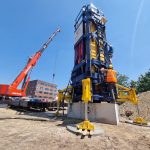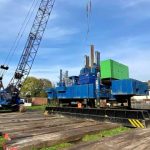



What is the difference between static and dynamic pile load testing?
Static load testing and dynamic load testing are two distinct methods for verifying pile capacity, and the main differences lie in how the load is applied in the field, which parameters are measured (and how) and how the results are elaborated. Static load testing applies a slow, sustained force to a pile and measures its physical response directly. Dynamic load testing uses high-speed impact forces and signal analysis to estimate mobilized capacity indirectly. Both methods are widely accepted in geotechnical practice, but they suit different project conditions, budgets, and accuracy requirements. The sections below answer the most common questions engineers and project teams ask when working with these methods.
Note that there is third test method, which is Rapid Load Testing. Although this method is not discussed in this article, it should be noted that Rapid Load Testing more or less fills the gap between static and dynamic load testing, by combining both main advantages and avoiding both main disadvantages: compared to static testing accuracy and reliability are much better for Rapid Load testing (which is user independent) than for dynamic load testing (which is highly user dependent), while productivity and cost level of RLT are much closer to DLT.
Which pile load testing method is more accurate?
Compared to dynamic load testing, static load testing is by far and without any doubt the most direct and reliable method for measuring pile capacity, because it applies load in a controlled, measurable way and observes pile behavior in real time. Dynamic pile load testing methods and services can be reasonably accurate when properly performed on end bearing steel piles in suitable soil conditions and if interpreted correctly by experienced engineers doing signal matching. Under such favorable conditions bearing capacity estimates can be achieved within 10 to 20 percent of static load test results. Depending on the project and the objectives of the test this can be acceptable in many cases. But in other conditions, especially in case of (bored) cast in situ concrete piles, bearing capacity estimates obtained with dynamic load testing are not very accurate and will at best be within 20 to 40 percent of static load test results. One of the main sources of inaccuracy is the fact that the results of the method are inherently user dependent, also when elaborated by well-trained and experienced engineers. That makes it hard or even impossible to establish a consistent correlation between results of dynamic and static testing. In other words: reliable calibration is not possible, especially not for cast in situ piles. As pointed out above, Rapid Load Testing is user independent, which makes reliable calibration possible.
For most driven (steel) piles, the accuracy of dynamic load testing can be sufficient to support sound engineering decisions. For concrete cast in situ piles the accuracy is mostly insufficient. Regulatory bodies and international standards recognize both methods as valid. The choice often comes down to the level of certainty required, the consequences of foundation failure, the required information on actual load-settlement behavior and whether a static test can serve as a reference point for calibrating dynamic results.
How does static load testing actually work?
Static load testing works by applying a gradually increasing axial load to the top of a pile and measuring settlement at each load increment until the pile reaches its design capacity or a defined failure criterion. The load is typically applied using kentledge (dead weight stacked on a platform above the pile), reaction piles anchored into the ground, or a ground anchor system. Displacement is measured with precision instruments attached to reference beams independent of the test setup.
The test follows a defined loading protocol, often applying load in stages and holding each stage for a set period to observe creep behavior. The result is a load-settlement curve that directly shows how the pile responds under working and ultimate load conditions. This curve gives engineers a clear, physical picture of pile stiffness, capacity, and deformation behavior that requires no mathematical modeling to interpret.
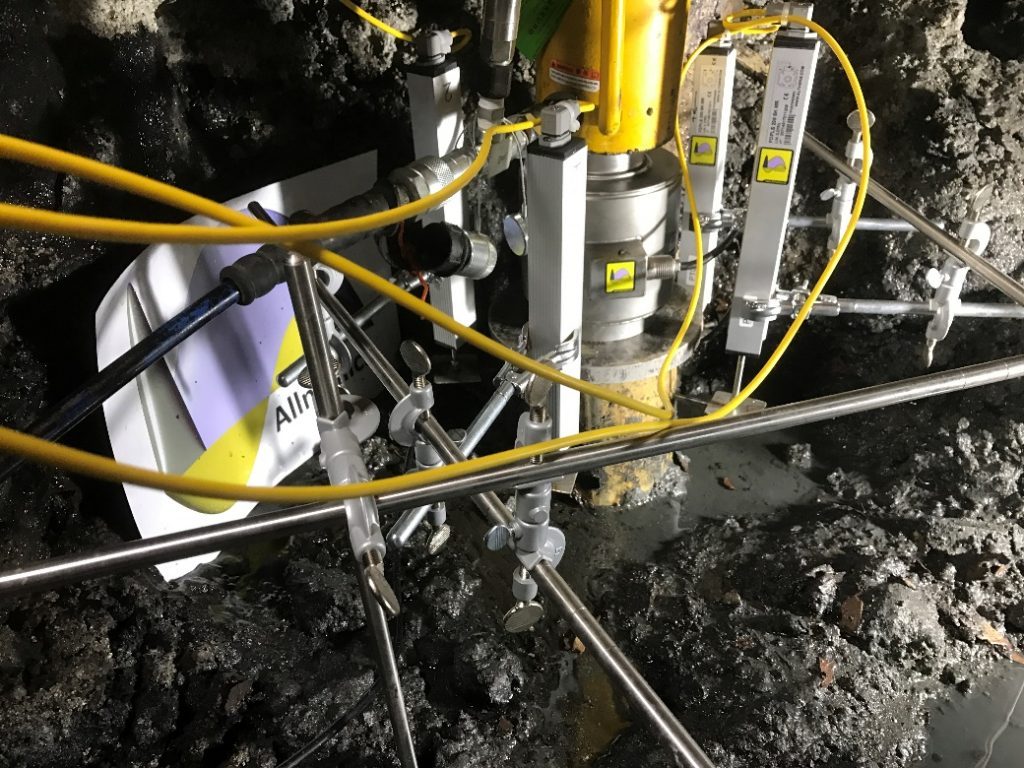
Static Load Testing of a wooden pile.
How does dynamic load testing work?
Dynamic load testing works by instrumenting a pile with strain gauges and accelerometers, then striking the pile head with a drop hammer or pile driving hammer and recording the stress wave that travels through the pile. The recorded signals are analyzed using software such as AllWave-DLT or similar signal matching programs to estimate mobilized static pile capacity and soil resistance distribution. The entire test takes a fraction of the time required for static testing.
The method works by measuring strain and acceleration at the pile head during hammer impact. These measurements feed into a wave equation analysis called signal matching, which models how stress waves travel through the pile and interact with changes in the pile properties and resistance from the surrounding soil. By iteration, the parameters of the soil model are changed until the calculated response (upward force wave) on the measured impact (test blow) has a reasonable signal match with the response that can be derived from the measurements. At that point a calibrated model is obtained, from which mobilized static capacity of the pile can be derived. Signal matching analysis can be performed using suitable software such as AllWave-DLT (or for instance capwap).
Dynamic pile load testing can be reasonably accurate when properly performed on end bearing steel piles in suitable soil conditions and if interpreted correctly by experienced engineers doing signal matching. Under such favorable conditions bearing capacity estimates can be achieved within 10 to 20 percent of static load test results. Depending on the project and the objectives of the test this can be acceptable in many cases. But in other conditions, especially in case of (bored) cast in situ concrete piles, bearing capacity estimates obtained with dynamic load testing are not very accurate and will at best be within 20 to 40 percent of static load test results.
Dynamic load testing can be performed during pile installation (as part of pile driving analysis) or as a re-strike test after a waiting period to account for soil setup or relaxation effects. This flexibility makes it practical for large-scale projects where testing every pile statically would be impractical.
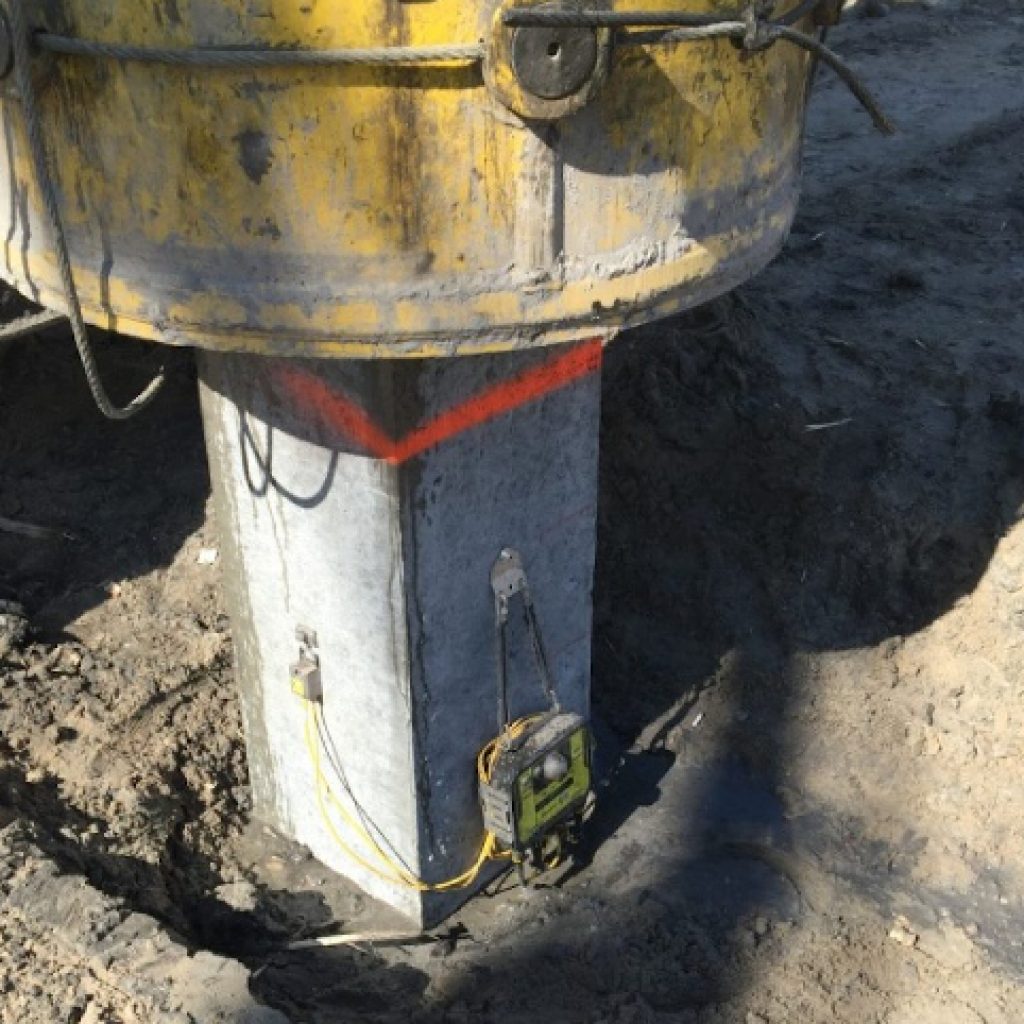
Dynamic Load Testing Signal Matching gives the bearing capacity of piles, including prefab concrete piles
What are the cost and time differences between the two methods?
Dynamic load testing is significantly faster and less expensive than static load testing, often by a factor of five to ten in both cost and time depending on pile size and site conditions. A dynamic test on a single pile can typically be completed in a few hours, while a static load test requires days of setup, loading, and monitoring, plus the cost of reaction systems or kentledge.
The table below summarizes the key practical differences:
- Setup time: Dynamic testing requires minimal preparation in case of driven piles; static testing requires constructing a reaction system that can take several days. Cast in situ piles require preparation of the pile head for testing, regardless of the test method. This involves curing timen
- Test duration: Dynamic tests are completed in hours; static tests run over one to several days
- Cost per pile: Dynamic testing costs a fraction of static testing, making it feasible to test more piles on the same budget
- Mobilization: Dynamic testing requires mobilization of a drop weight device (+ crane for assembly) or a piling rig with a suitable piling hammer; the mass of the drop weight needs to be 2% of the corresponding equivalent static test load. Static testing requires mobilization of kentledge weight and a a reaction frame, or the installation of reaction piles/anchors plus mobilization of a reaction frame.
- Number of piles tested: Dynamic testing allows routine testing of many piles; static testing is typically reserved for a small number of representative piles
For large projects with hundreds of piles, dynamic testing offers a practical way to build statistical confidence across the pile population without the cost of multiple static tests.
When should you choose static over dynamic pile testing?
You should choose static load testing when you need direct, unambiguous proof of pile capacity for high-consequence structures, direct information of load settlement behavior (= stiffness), when local regulations require it, or when pile type (cast in situ) and/or site conditions (cohesive soils) make dynamic test interpretation unreliable. Static testing is the preferred method for cast in situ piles and for critical foundations such as bridges, high-rise buildings, offshore structures, and any project where the consequences of foundation underperformance are severe.
Static testing is also the better choice when pile behavior is complex and difficult to model dynamically, for example cast in situ piles with (inherently) variable cross section properties, piles in soil profiles with cohesive layers, or piles where clear and reliable distinction between toe resistance and shaft resistance needs to be made. In these situations, the direct measurement provided by a static test reduces or even removes uncertainty that signal matching alone cannot (fully) resolve.
Additionally, static tests serve as important calibration references. Running a suitable amount of static tests on representative piles at the start of a project allows your team to validate dynamic test results on subsequent piles, combining the accuracy of static testing with the efficiency of dynamic testing across the full pile program.
Can static and dynamic pile testing be used together?
Yes, static and dynamic pile load testing are frequently used together, and combining both methods on the same project produces stronger results than either method alone. A common approach is to perform a static load test on one or more representative piles early in the project, then use dynamic testing on a larger number of (identical) piles to verify that the broader pile population performs consistently with the statically tested reference piles.
This combined approach gives your team the direct accuracy of static testing where it matters most, while using the speed and economy of dynamic testing to extend quality assurance across the entire foundation. It also satisfies regulatory requirements that may mandate at least one static test while allowing dynamic testing to cover the rest of the program cost-effectively.
In practice, the two methods complement each other well. Dynamic testing can flag anomalies or underperforming piles that warrant further investigation, and static testing can then confirm or resolve those findings. Together, they provide a more complete picture of foundation performance than either method delivers independently.
How We Help with Pile Load Testing
We work with project teams across infrastructure, energy, marine, and construction sectors to design and execute pile load testing programs that match the technical demands and budget realities of each project. Whether your project calls for static testing, dynamic testing, or a combination of both, we bring the expertise to deliver reliable results.
- Static Load Testing: We plan and execute static load tests using kentledge, reaction pile systems, or ground anchors, providing full load-settlement analysis and engineering interpretation
- Dynamic Load Testing and PDA: We instrument piles, perform drop hammer or driving tests, and carry out signal matching analysis to determine capacity, soil resistance distribution, and pile integrity
- Rapid Load Testing: For projects where static testing is impractical and dynamic testing needs supplementing, we offer Rapid Load Testing as an intermediate method with its own advantages in speed and accuracy
- Combined testing programs: We help you design a testing strategy that uses static and dynamic methods together, maximizing confidence while managing cost and schedule
- Independent technical review: We provide expert review and validation of pile testing data from any source, supporting your team in making well-founded engineering decisions
If you are planning a pile testing program and want to discuss which approach fits your project, contact us directly to speak with one of our foundation engineering specialists.