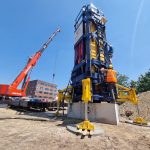



What is a driveability study and why does it matter?
A drivability study is a predictive engineering analysis that simulates the pile installation process before a single pile is driven. It uses numerical models of the pile, soil, and hammer to forecast whether a chosen hammer can install the pile to the required depth, whether stresses during driving will remain within safe limits, and what blow counts to expect throughout penetration. Any project team planning to drive piles — onshore or offshore — benefits from running this analysis during the engineering stage, before equipment is mobilized and contracts are signed.
The sections below answer the most common questions about drivability studies: how they work, what they predict, when to commission one, how they differ from dynamic load testing, and what risks they help you avoid.
How is a drivability study carried out?
A drivability study is carried out by building a numerical model that represents the pile geometry, the soil profile, and the selected driving hammer, then running wave equation simulations to predict how the system behaves blow by blow as the pile advances through each soil layer. The process follows a structured sequence that moves from data collection through modeling to output interpretation.
Inputs required for the model
The analysis starts with three categories of input. Pile data covers cross-sectional dimensions, wall thickness, material properties, and total length. Soil data comes from site investigation reports — typically CPT or SPT results — which are used to derive unit skin friction and end-bearing resistance as a function of depth. Hammer data includes the rated energy, ram weight, stroke, efficiency, and cushion properties for the proposed installation equipment.
Simulation and output
With these inputs in place, wave equation software simulates each hammer blow and calculates the pile’s response. For impact-driven piles, programs such as AllWave-PDP handle this simulation. For piles installed with a vibratory hammer, dedicated vibratory driving prediction tools — such as AllWave-VDP — model the oscillating force, frequency, and penetration rate instead of discrete blow counts. The outputs include a blow count profile versus depth, predicted compressive and tensile stresses in the pile at each stage of driving, and an assessment of whether the hammer can reach the target toe level or will encounter refusal before that point.
What does a drivability study predict?
A drivability study predicts four core outcomes: whether the pile can be driven to the target penetration depth, the blow count or penetration rate at each depth increment, the maximum compressive and tensile stresses the pile will experience during driving, and the cumulative fatigue damage those stresses impose on the pile material over the full installation sequence.
These predictions answer the practical questions your project team needs to resolve before mobilization. Is the hammer heavy enough? If the predicted blow count climbs to refusal before the pile reaches design depth, the hammer is undersized and must be replaced or supplemented. Are driving stresses acceptable? If peak compressive or tensile stresses exceed the pile’s material limits, the hammer energy must be reduced, the driving sequence adjusted, or the pile wall thickness increased. For large-diameter offshore monopiles, where fatigue life is a design constraint in its own right, the cumulative stress cycle count predicted by the study feeds directly into the fatigue assessment.
For vibratory-driven piles, the study predicts the maximum achievable penetration depth given the vibratory hammer’s eccentric moment and frequency, the penetration rate as a function of depth, and the stresses generated by the oscillating force — information that is just as relevant for quality control as the equivalent impact-driven outputs.
When should a drivability study be commissioned?
A drivability study should be commissioned during the engineering stage of a project, before equipment selection is finalized and before installation contracts are awarded. Running the analysis at this point gives your team the information needed to specify the right hammer, set realistic installation criteria, and identify potential problems while they are still inexpensive to solve.
There are several specific triggers that make a drivability study particularly relevant:
- Hammer selection: When you need to confirm that a proposed hammer can install the pile to the required depth without damaging it, the study provides the quantitative basis for that decision.
- Offshore monopile installation: Large-diameter monopiles for offshore wind farms involve significant capital commitment per pile. A drivability study reduces the risk of costly installation problems in a remote, weather-sensitive environment.
- Unfamiliar or variable soil conditions: When the soil profile includes hard layers, variable stratigraphy, or limited investigation data, the study identifies depth intervals where driving may become difficult or stresses may spike.
- Fatigue-sensitive structures: When the pile material or the structure it supports has a defined fatigue life, the study quantifies the stress cycles accumulated during installation so they can be accounted for in the overall fatigue budget.
- Sheet pile walls and retaining structures: Drivability analysis applies equally to sheet piles, where it informs both final-stage design and the vibratory driving sequence.
Commissioning the study after problems emerge during installation is possible but far less effective. At that stage, the options available to your team are narrower and the cost of any change is higher.
What’s the difference between a drivability study and dynamic load testing?
A drivability study is a predictive analysis performed before or during the engineering stage to forecast pile installation behavior. Dynamic load testing is a measurement-based assessment performed after or during installation to evaluate the pile’s bearing capacity and structural integrity. The two methods address different questions at different points in the project timeline.
The distinction is worth making explicit because the two methods share some underlying theory — both rely on stress wave mechanics — but they serve entirely different purposes:
- Drivability study: Uses wave equation modeling to simulate the driving process in advance. Inputs are soil investigation data, pile geometry, and hammer specifications. The output is a prediction of what will happen during installation — blow counts, stresses, penetration depth, and fatigue.
- Dynamic load testing (DLT): Uses sensors attached to the pile to measure force and velocity during actual hammer impacts. The measured data is then analyzed through signal matching to derive the pile’s bearing capacity, soil resistance distribution, and structural condition. DLT is a pile load test — it tells you what the pile actually achieved, not what the model predicted.
In practice, the two methods complement each other. The drivability study informs the installation plan; dynamic load testing during driving or at restrike verifies that the pile performed as expected. When soil conditions differ from the site investigation data, DLT results can also be used to update the drivability model for the remaining piles in the program.
What risks does a drivability study help avoid?
A drivability study helps you avoid three categories of risk: equipment failure to install the pile, structural damage to the pile during driving, and costly surprises during offshore or remote installation campaigns where mobilizing replacement equipment is expensive and time-consuming.
Installation refusal before target depth: If the hammer cannot overcome soil resistance at a particular depth, the pile stops short of its design toe level. This can compromise bearing capacity and require remediation — additional piles, pile extensions, or redesign. The drivability study identifies this risk before the hammer is on site.
Pile damage from excessive driving stresses: Compressive stresses that exceed the pile’s yield strength cause permanent deformation. Tensile stresses — particularly relevant during driving through soft layers above harder strata — can crack concrete piles or initiate fatigue cracking in steel. The study predicts where these stress peaks occur so the driving procedure can be adjusted in advance.
Fatigue damage accumulation: For offshore monopiles and other fatigue-sensitive structures, the stress cycles generated during installation reduce the remaining fatigue life of the pile. Without a drivability study, this contribution is unknown and may not be accounted for in the structural design. The study quantifies it so the design team can make an informed decision.
Hammer selection errors: Choosing a hammer that is too light wastes time and risks refusal. Choosing one that is too heavy risks overstressing the pile. The drivability study defines the acceptable operating window for hammer energy and stroke, giving the installation team clear guidance for the driving procedure.
Schedule and cost overruns: Installation problems discovered on site — particularly offshore — translate directly into vessel day-rate costs and program delays. Identifying and resolving these issues during the engineering stage, when changes cost relatively little, is far more effective than responding to them during construction.
How We Can Help with Drivability Studies
We carry out drivability studies for a wide range of foundation types and project environments, from onshore infrastructure piles to large-diameter offshore monopiles for wind energy developments. Our team uses the AllWave software package — developed in-house — which covers both impact driving prediction (AllWave-PDP) and vibratory driving prediction (AllWave-VDP), supported by an extensive database of monitored and predicted results built up over decades of fieldwork.
When you commission a drivability study with us, we provide:
- Blow count profiles and penetration rate predictions for each soil layer, based on your site investigation data and proposed pile geometry
- Driving stress analysis covering both compressive and tensile stresses, with clear identification of depth intervals where stress limits may be approached
- Fatigue damage assessment for the installation phase, integrated with the structural design requirements of your project
- Hammer selection guidance and operating recommendations, including acceptable stroke ranges and energy limits for the proposed installation equipment
- Vibratory driving predictions for piles installed with a vibratory hammer, including maximum achievable penetration depth and penetration rate as a function of depth
- Sheet pile wall design and installation analysis for both temporary and permanent retaining structures
We also connect drivability studies directly to our pile load testing and installation monitoring services. If your project requires verification of pile performance after installation, our team can carry out dynamic load testing, rapid load testing, or static load testing as a follow-on activity, using the same project knowledge and soil models developed during the drivability phase.
If you are planning a piling program and want to understand what a drivability study would cover for your specific project, contact our team to discuss your site conditions, pile type, and installation equipment.