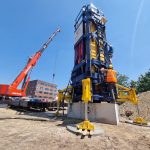



How do soil conditions affect pile load test outcomes?
Soil conditions are one of the most significant factors shaping pile load test outcomes. The soil type, layering, drainage behavior, and variability across a site all influence how a pile carries load and how accurately any given test method can measure that capacity. Understanding these relationships helps you select the right testing approach and interpret results with confidence.
Which soil types are most challenging for pile load tests?
Cohesive soils such as soft clays and silts are the most challenging soil types for pile load tests, particularly for dynamic methods. These soils exhibit time-dependent behavior, meaning the pile’s resistance changes significantly depending on how quickly the load is applied. Granular soils such as sands and gravels are generally more straightforward to test and interpret.
The difficulty with cohesive soils comes down to a fundamental mismatch between test speed and soil response. Dynamic load testing applies a load that lasts only milliseconds. In that timeframe, soft clay cannot drain or consolidate, so the measured resistance reflects an undrained, transient condition rather than the long-term drained capacity the structure will actually rely on. Pore water pressures build up and dissipate over hours or days, not milliseconds, and dynamic testing simply cannot capture that process.
Cast-in-situ concrete piles in cohesive soils compound the problem further. These piles have variable cross-sections and uncertain concrete stiffness, which introduces additional inaccuracy into the signal matching analysis used to derive capacity from dynamic measurements. For these pile types in these soils, bearing capacity estimates from dynamic testing will, at best, fall within 20 to 40% of static load test results, compared to 10 to 20% for end-bearing steel piles in granular soils.
Organic soils, peat, and highly variable fills present their own complications. Organic materials compress and creep under sustained load in ways that are difficult to predict from a short-duration test. Very soft fills may not provide enough lateral support to allow a reliable dynamic test at all.
How does soil layering affect stress wave behavior during dynamic load testing?
Soil layering affects dynamic load testing by creating varying resistance profiles along the pile shaft, which complicates the signal matching process used to derive bearing capacity. Each soil layer contributes differently to shaft friction and toe resistance, and the stress wave traveling through the pile interacts with all of these layers simultaneously during a hammer impact.
During a pile load testing procedure, sensors at the pile head measure strain and acceleration. These measurements feed into a wave equation analysis where a soil model is built and adjusted iteratively until the calculated pile response matches the measured response. In uniform soil conditions, this process is relatively constrained. In layered profiles, the number of variables increases substantially because each layer introduces its own stiffness, damping, and resistance parameters.
The practical consequence is a wider bandwidth of possible solutions. Different combinations of layer resistance can produce equally plausible signal matches, making it harder to identify a unique, reliable answer. An experienced engineer using well-calibrated software can narrow this bandwidth considerably, but the inherent ambiguity is larger than in uniform soil conditions.
Layering also matters for pile toe behavior. A pile driven through soft clay into a dense sand or rock layer behaves very differently from a friction pile embedded entirely in clay. End-bearing piles with the toe in a stiff granular layer or rock produce cleaner, more interpretable signals because the toe response is sharp and well-defined. Friction piles in layered cohesive profiles produce more diffuse signals that are harder to separate into individual layer contributions.
What is the difference between drained and undrained soil response in pile tests?
Drained soil response occurs when pore water pressures have fully dissipated and the soil carries load through effective stress. Undrained response occurs when loading is fast enough that pore water cannot drain, and the soil resists load through a combination of effective stress and excess pore pressure. The distinction matters because a pile’s measured capacity in a test depends heavily on which condition the soil is in at the time of testing.
In granular soils such as sands and gravels, drainage happens almost instantaneously because permeability is high. These soils behave in a drained manner during virtually any pile test, regardless of loading speed. This makes them more predictable and easier to test accurately across different methods.
In fine-grained cohesive soils such as clays and silts, drainage is slow. A static load test applied over hours or days allows partial drainage and captures behavior closer to the long-term drained condition. A dynamic test lasting milliseconds captures a purely undrained response. A rapid load test, applied over a duration of roughly 100 to 200 milliseconds, falls between these extremes and requires a correction factor to account for rate effects and partial drainage.
This difference has direct implications for result interpretation. If you test a pile in soft clay shortly after installation, the soil is in an undrained state and pore pressures from driving are still elevated. The measured capacity will be lower than the long-term capacity after consolidation and set-up. Waiting for set-up before testing, or performing a restrike test after a defined waiting period, gives a more representative result. Static load testing under these conditions provides data that dynamic testing cannot replicate, including the full load-displacement curve under sustained load and the creep behavior under constant force.
How does soil variability across a site affect pile test result reliability?
High soil variability across a site reduces the reliability of extrapolating pile test results from tested piles to untested piles. A test result is only as representative as the soil conditions at the test location. Where conditions change significantly across a site, a single test or a small number of tests may not capture the full range of foundation performance.
Sites with consistent, well-characterized soil profiles allow test results to be applied with greater confidence across the pile program. If the geotechnical investigation shows uniform stratigraphy and consistent soil properties, a well-executed test on a representative pile provides a reliable basis for design verification. In contrast, sites with variable fills, irregular bedrock surfaces, pockets of soft material, or lateral changes in layer thickness require more tests to achieve the same level of confidence.
Soil variability also affects the choice of test location. Testing a pile in the most favorable part of a variable site will overestimate average performance. Testing in the weakest zone may be overly conservative. The most defensible approach is to test in locations that represent the range of conditions across the site, informed by the geotechnical investigation data.
For large programs such as offshore wind foundations or infrastructure projects with many piles, statistical thinking becomes important. Testing a meaningful proportion of piles, rather than a token few, allows you to identify outliers, confirm that the installation is performing within expected bounds, and adjust the program if early results reveal unexpected behavior. Dynamic load testing during installation is particularly useful in this context because it can be applied to a large number of piles without the logistical burden of a full static test setup for each one.
When should soil conditions trigger a change in pile testing method?
Soil conditions should trigger a change in pile testing method when the default method cannot reliably capture the soil’s governing behavior or when the accuracy required by the project cannot be achieved with the planned approach. The most common trigger is the presence of cohesive soils, cast-in-situ pile types, or significant time-dependent behavior that dynamic testing cannot adequately represent.
Consider switching from dynamic to static or rapid load testing when:
- The pile is cast in situ or bored, where variable cross-section and uncertain concrete properties reduce the accuracy of dynamic signal matching to an unacceptable level
- The soil profile is dominated by soft clay or silt, where time-dependent behavior and pore pressure effects are significant and the dynamic test duration is too short to capture them
- The pile is a friction pile with minimal free-standing length, which limits the quality of the dynamic measurement and widens the bandwidth of signal matching outcomes
- Regulatory requirements or contract specifications demand a direct load-settlement curve, which only static or rapid load testing can provide without an interpretive model
- Early dynamic test results show unexpectedly high variability, suggesting that soil conditions are more complex than anticipated and that a direct measurement method is needed for verification
Conversely, dynamic load testing during installation remains the most practical approach for large programs of driven steel piles in granular soils, particularly offshore, where static testing is logistically complex and testing every pile statically is not feasible. The key is matching the method to the soil conditions and the accuracy the project requires, not defaulting to a single approach regardless of context.
Rapid load testing occupies a useful middle ground. It applies a load over a longer duration than a dynamic blow, eliminating stress wave effects and improving accuracy in conditions where dynamic testing alone is insufficient but a full static test is impractical. For piles in cohesive soils or cast-in-situ piles where dynamic accuracy is limited, rapid load testing often provides a better balance of accuracy and practicality.
How We Help You Navigate Soil-Dependent Testing Decisions
Choosing the right pile testing method for your soil conditions requires both technical knowledge and field experience. We bring both. With decades of work across granular and cohesive soils, layered profiles, offshore environments, and variable sites, our team helps you design a testing program that delivers reliable results for your specific ground conditions.
Here is what we offer:
- Method selection advice based on your soil profile, pile type, and project accuracy requirements, so you invest in testing that actually answers your design questions
- Dynamic load testing using our own PDA system, with signal matching analysis performed by experienced engineers using AllWave-DLT software, minimizing the bandwidth of outcomes in challenging soil conditions
- Static load testing for projects where a direct load-settlement curve is required, including piles in cohesive soils, cast-in-situ piles, or projects with strict regulatory verification requirements
- Rapid load testing using our StatRapid system, providing a direct measurement method that improves accuracy over dynamic testing in conditions where time-dependent soil behavior is a concern
- Site-wide testing programs designed to account for soil variability, giving you statistically meaningful coverage across the pile population rather than a single data point
- Independent technical review of existing test data and signal matching results, particularly useful when you need a second opinion on results from challenging soil conditions
If your project involves complex soil conditions and you want to make sure your pile testing program is fit for purpose, contact our team to discuss your specific situation.
Artículos relacionados
- Why is the driving frequency so important in a Vibratory Driving Prediction?
- What is the difference between Rapid Load testing and Static Load testing?
- What is the CASE method in dynamic pile testing?
- What is the Quad PDR and when is it used?
- How accurate is dynamic pile load testing compared to static testing?